
Caravaggio’s Young Bacchus: pictorial analysis and symbolic reading
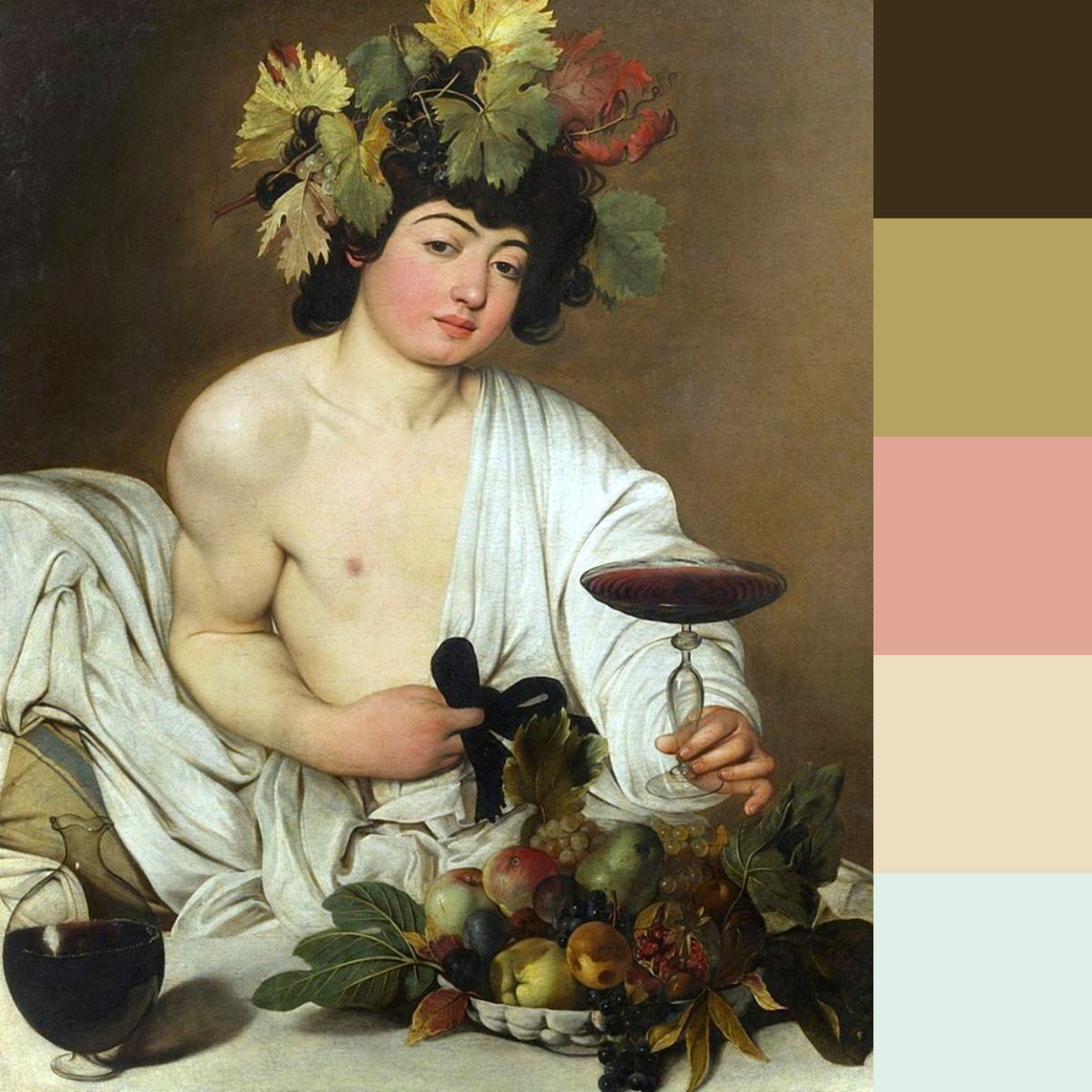
Painted c. 1596, Young Bacchus is among Caravaggio’s early allegorical portraits. He fuses sensuality with raw realism, replacing the idealized god with a streetwise youth. Raking light reveals flesh with near-tactile precision — emblem of nascent Caravaggesque naturalism.
This work may also be reproduced as a hand-painted copy, based on the original and respecting its color and composition.
Values and chiaroscuro
The lit face and torso oppose the heavy background shadows. This hierarchy models the body and isolates the figure in silence. The lateral light, precise and unsoftened by unnecessary gradation, sculpts the flesh while letting zones recede into darkness — a constant tension between appearance and withdrawal.
Focal point and staging
The focal point is the youth’s face — luminous skin and defined features draw the eye. Shoulder lines and the leafy “crown” return vision to the center. Darker fruit flank and frame the figure, intensifying attention on the offered gaze.
Atmosphere and message
Beyond carnal realism lies a meditation on time: youthful sensuality contrasts with bruised fruit — signs of vanity and transience. Through value contrasts, a face-centered focal point, and weighty forms, the painter expresses both life’s seduction and its fragility.
A copyist’s eye
Reworking this Caravaggio means seeking justness of chiaroscuro without losing shadow density. Skin must breathe; transitions stay supple, as if carved by grazing light. The face holds the picture’s tension: calm, offered, yet ringed by dark. Fruit and ground enforce a near-theatrical stillness. Each stroke weighs between life and vanitas — light becomes the body’s memory.
This pictorial approach also informs the copies of Caravaggio’s works created in my studio.
Going Further

ARTISTE DE PARIS
Christian Denéchaud, artiste peintre
50 avenue des Champs Elysées
75008 Paris
SIRET 452248461
FR90452248461
.png?t=)
© Artiste de Paris . fr - 2026