
Caillebotte’s The Floor Scrapers: analysis and pictorial reading
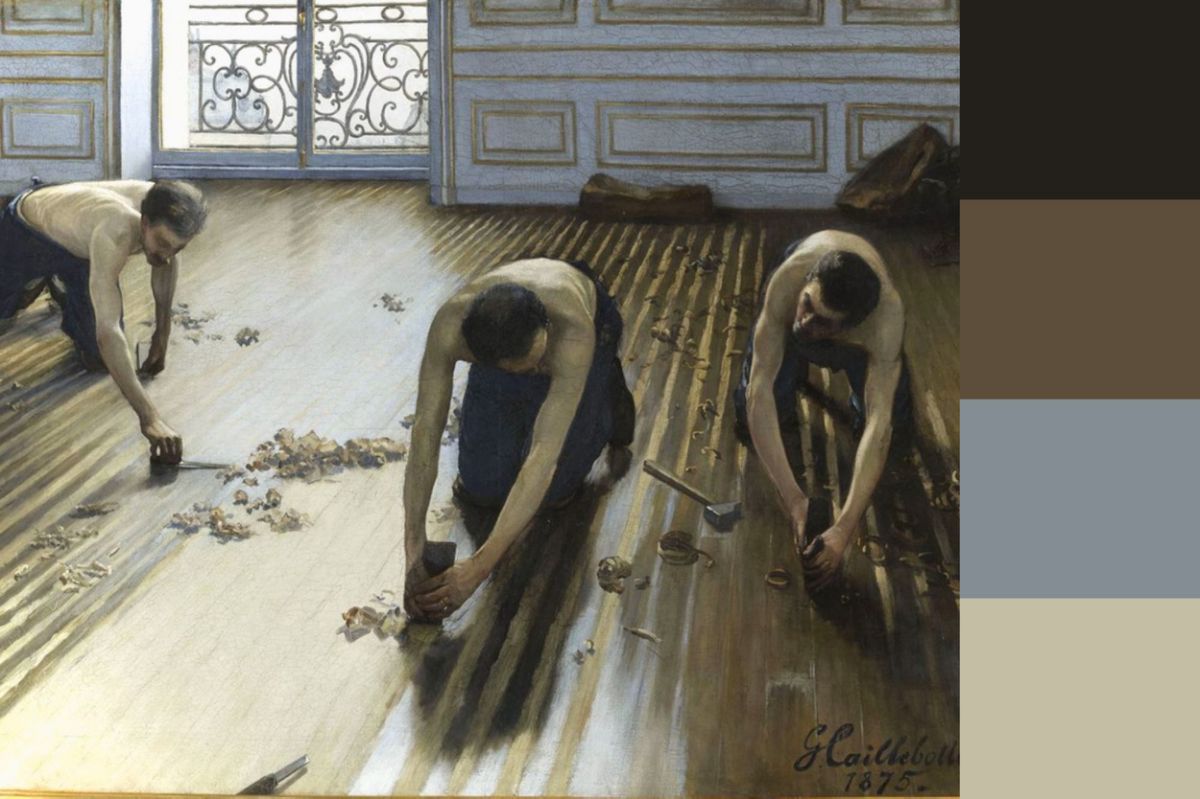
Shown at the 1875 Salon, The Floor Scrapers caused controversy for its direct realism and working-class subject, deemed unworthy of a large format. Yet Caillebotte imposes a new vision: light, perspective, and the rigor of values transform manual labor into a modern, monumental composition.
This work may also be reproduced as a hand-painted copy, based on the original and respecting its color and composition.
Visual reading and composition
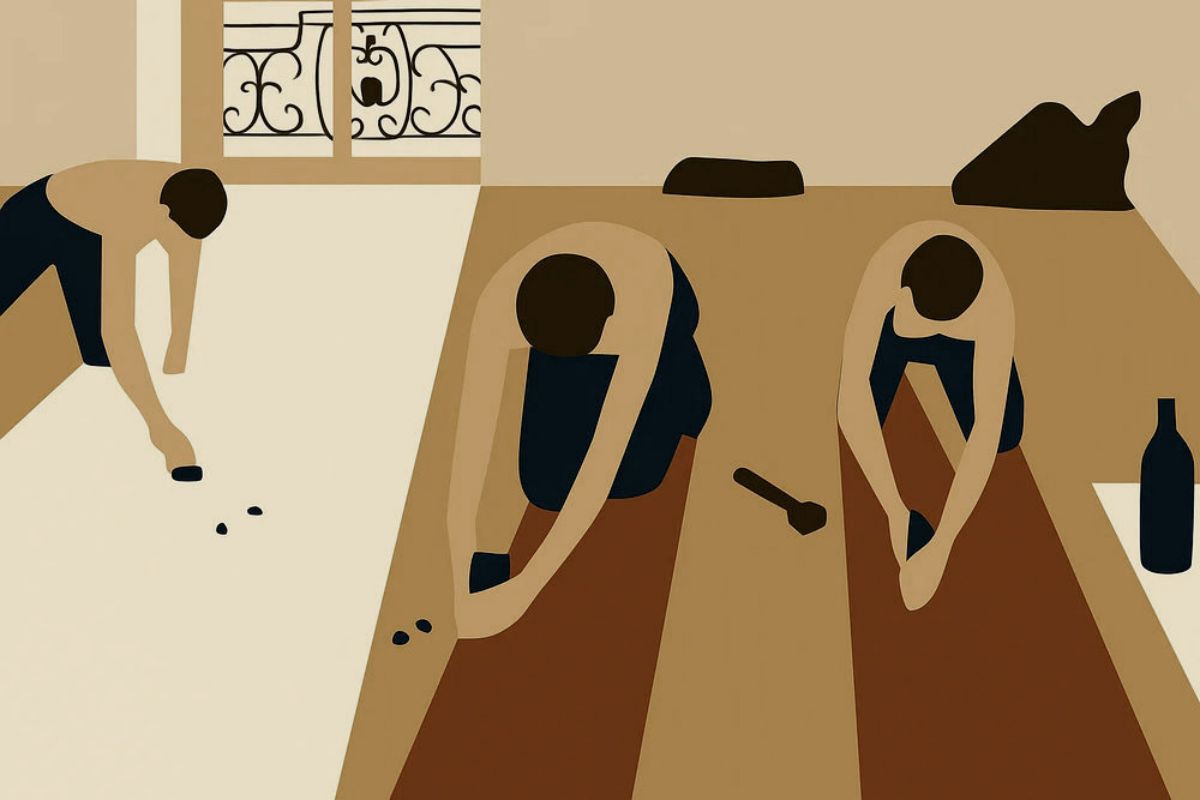
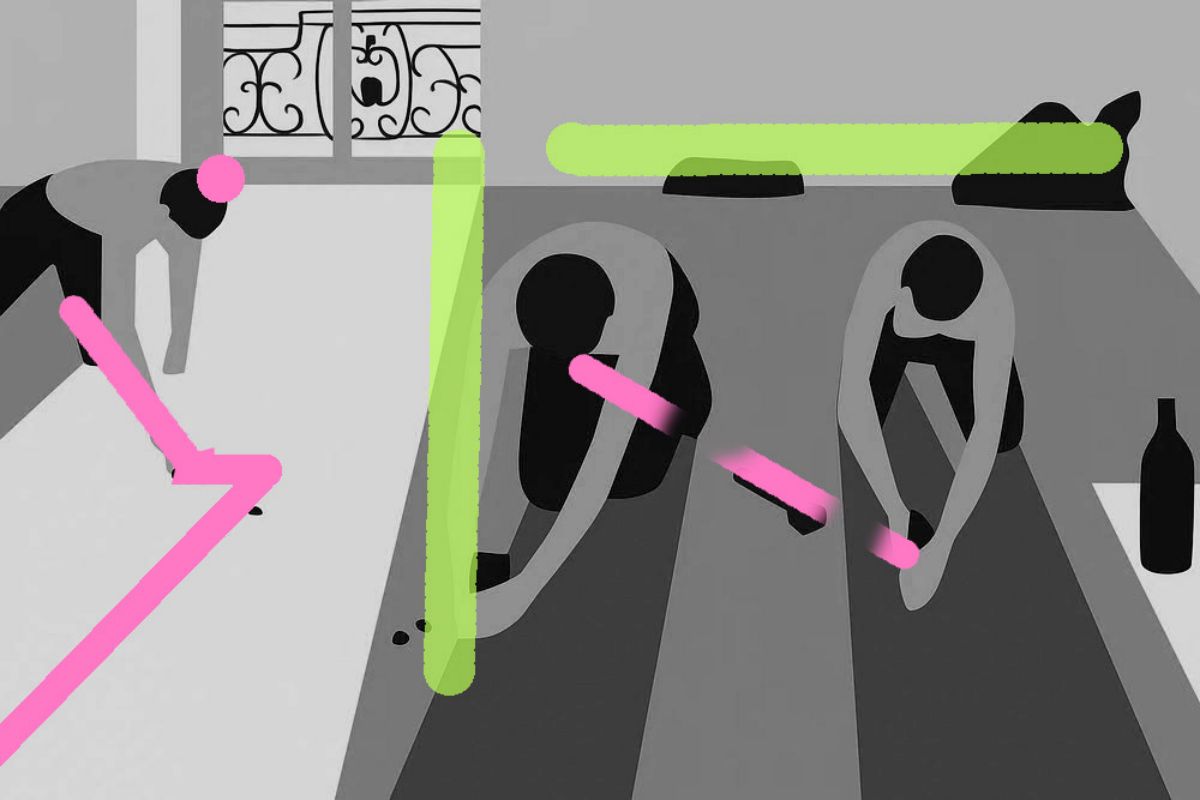
Values are structured between the large light areas of the parquet and the dark masses of bent bodies. This contrast fixes the focal point on the central luminous zone, the heart of the action. The converging lines of the floor lead the eye back to this center. Geometric forms of the interior dialogue with taut silhouettes, uniting space and effort in an ordered yet vibrant visual rhythm.
The dialogue between human effort, geometric lines, and perspective
Forms are marked by the strict geometry of the parquet and the angular silhouettes of the workers. The focal point is reinforced by the converging perspective lines that bring the gaze back to the center of the room. The composition balances large, stable masses with precise details, creating a visual rhythm that is tense but orderly.
A realistic, modern atmosphere
The combination of value contrasts, the work-centered focal point, and formal rigor conveys a sense of raw truth. Caillebotte elevates a working scene to an artistic subject, transforming the everyday into a modern image where human effort becomes monumental.
A copyist’s eye
Copying The Floor Scrapers is painting the light of labor. Each plane must keep its accuracy: the warmth of wood, the coolness of shadows, the tension of bodies. The touch should be sober yet alive, paced like breathing. The danger is to make a smooth scene; one must preserve fatigue and sliding light. In painting, one understands that Caillebotte paints less workers than the dignity of effort.
This pictorial approach also informs the copies of Gustave Caillebotte’s works created in my studio.
Going Further
ARTISTE DE PARIS
Christian Denéchaud, artiste peintre
50 avenue des Champs Elysées
75008 Paris
SIRET 452248461
FR90452248461
.png?t=)
© Artiste de Paris . fr - 2026