
Gauguin’s Arearea: analysis and pictorial reading
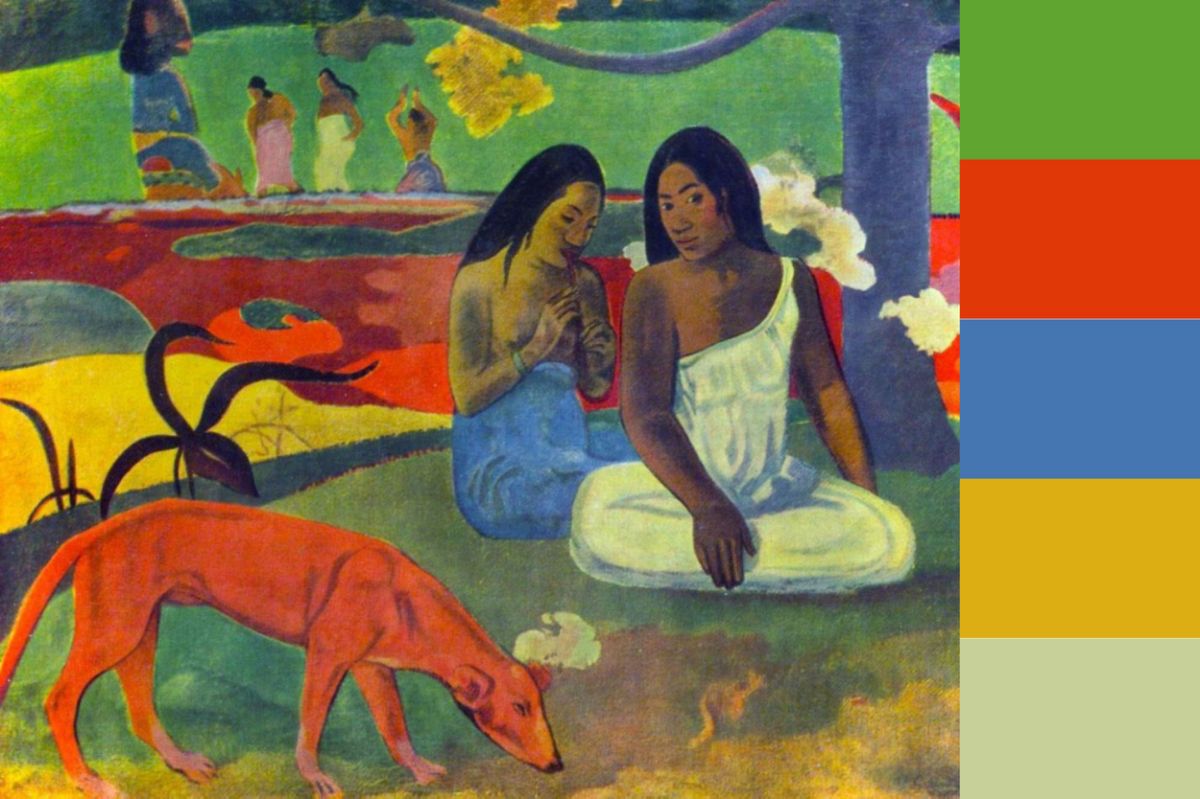
Painted in 1892 during Gauguin’s first Tahitian stay, Arearea affirms his symbolic, synthetic language. Inspired by island life, he blends spirituality, décor, and sensuality. Color, form, and light build a poetic vision of a world seen as purer and more original.
This work may also be reproduced as a hand-painted copy, based on the original and respecting its color and composition.
Visual reading and composition
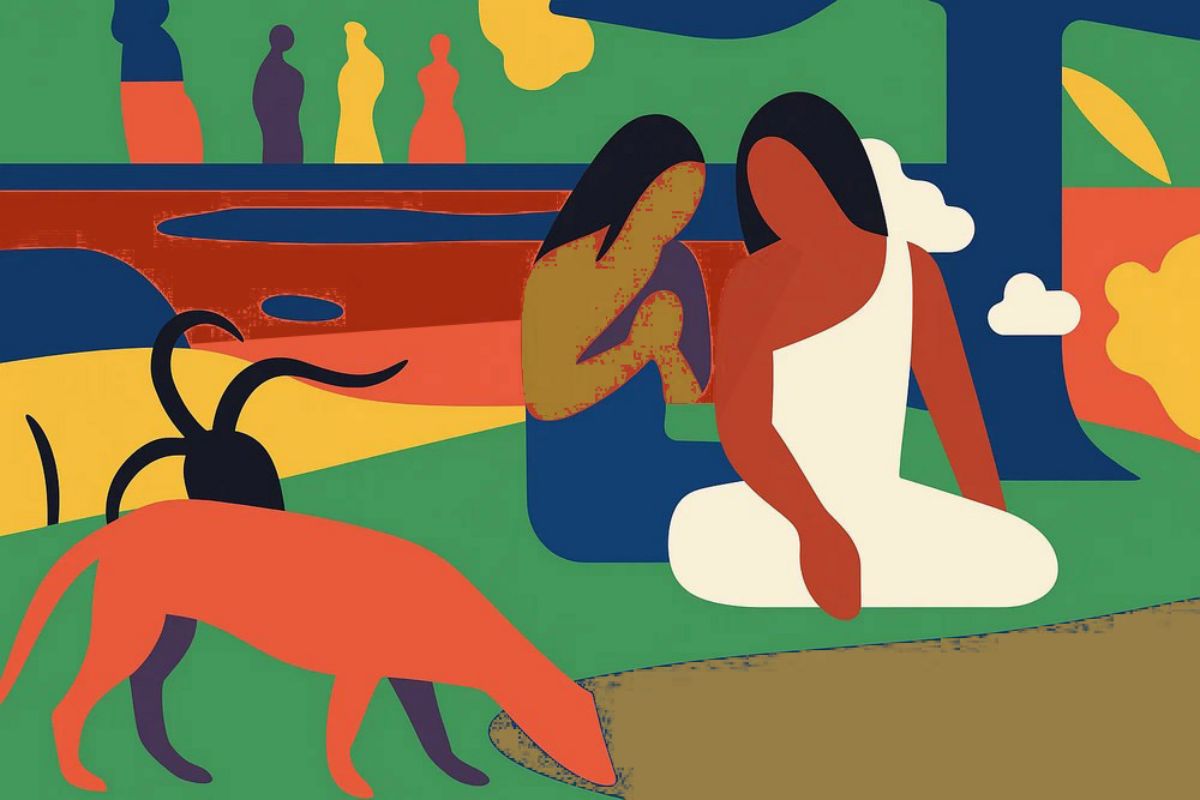
Values center on bright faces and dresses contrasting with the dark red dog and vegetation, setting a focal point on the central group. Simple, stable forms converse with decorative background motifs. Balance between color masses and ornament yields a calm, vibrant rhythm where each element accords with light.
Articulation of figures, animal, and décor
Simple, stable female silhouettes oppose the animal’s intensity and the background’s patterns. The focal point is asserted by the direction of gazes and the striking red dog that attracts and holds the eye. Varied forms — large vegetal masses, human figures, ornamental details — set a peaceful yet vibrant rhythm.
Symbolic, meditative atmosphere
Value contrasts, a human-animal focal center, and formal variety create quiet spirituality. Gauguin transcends genre scene to compose an image where nature, tradition, and color become symbolic language.
A copyist’s eye
Copying Arearea works color as architecture. Keep tone relations frank, without mixing, to preserve surface vibration. The red dog, visual pivot, must balance rather than dominate. Seek not nuance but accuracy of relations. Gauguin does not describe nature — he reinvents it as a colored chant.
This pictorial approach also informs the copies of Paul Gauguin’s works created in my studio.
Going Further

ARTISTE DE PARIS
Christian Denéchaud, artiste peintre
50 avenue des Champs Elysées
75008 Paris
SIRET 452248461
FR90452248461
.png?t=)
© Artiste de Paris . fr - 2026