
Sorolla’s The Horse’s Bath: analysis and pictorial reading
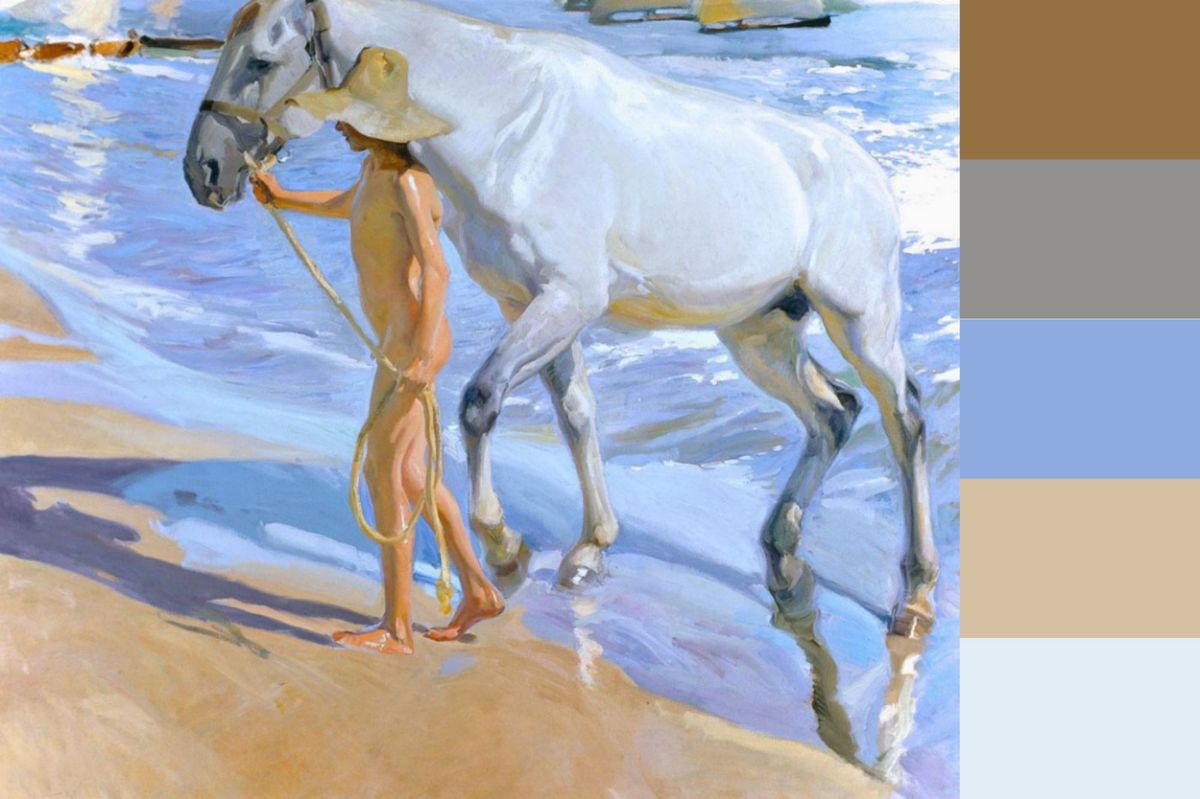
Painted in 1909, The Horse’s Bath shows Sorolla’s mastery of light and vigorous brushwork. He celebrates the Mediterranean and the intimate link between man, animal, and sea. Omnipresent light turns the scene into a hymn to clarity and natural vitality.
This work may also be reproduced as a hand-painted copy, based on the original and respecting its color and composition.
Visual reading and composition
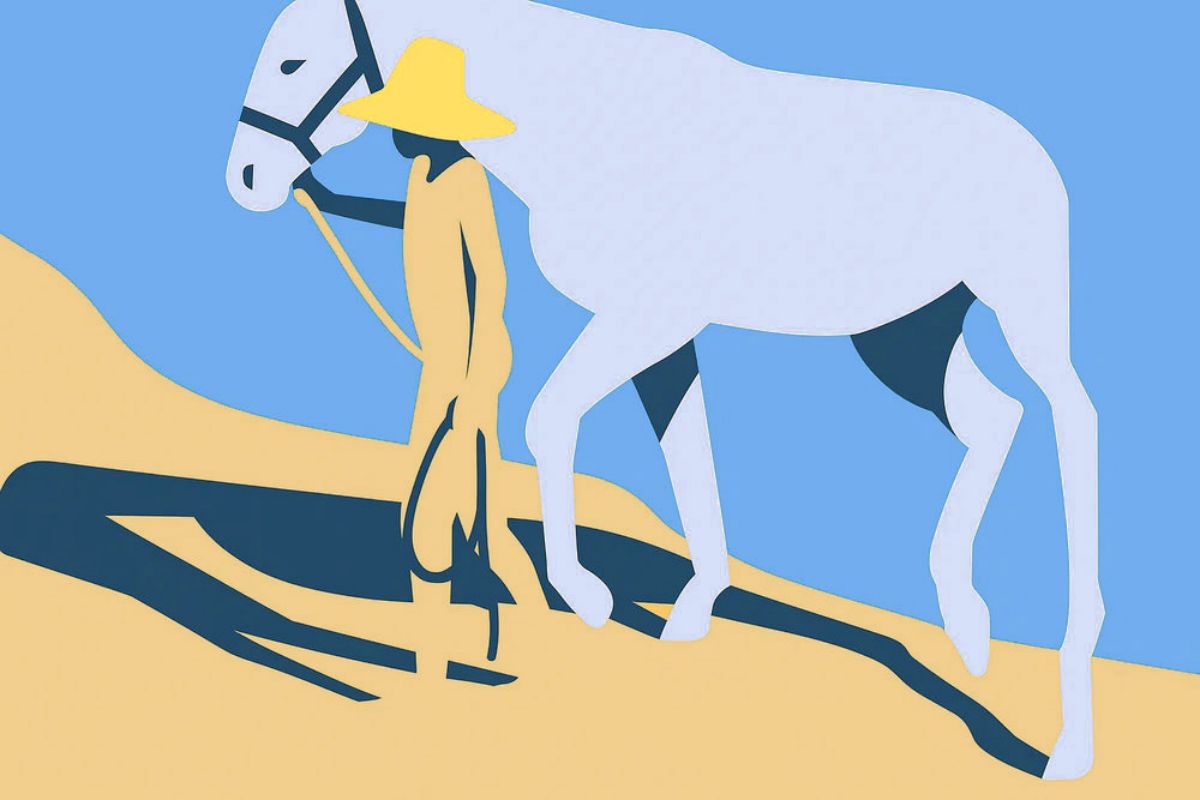
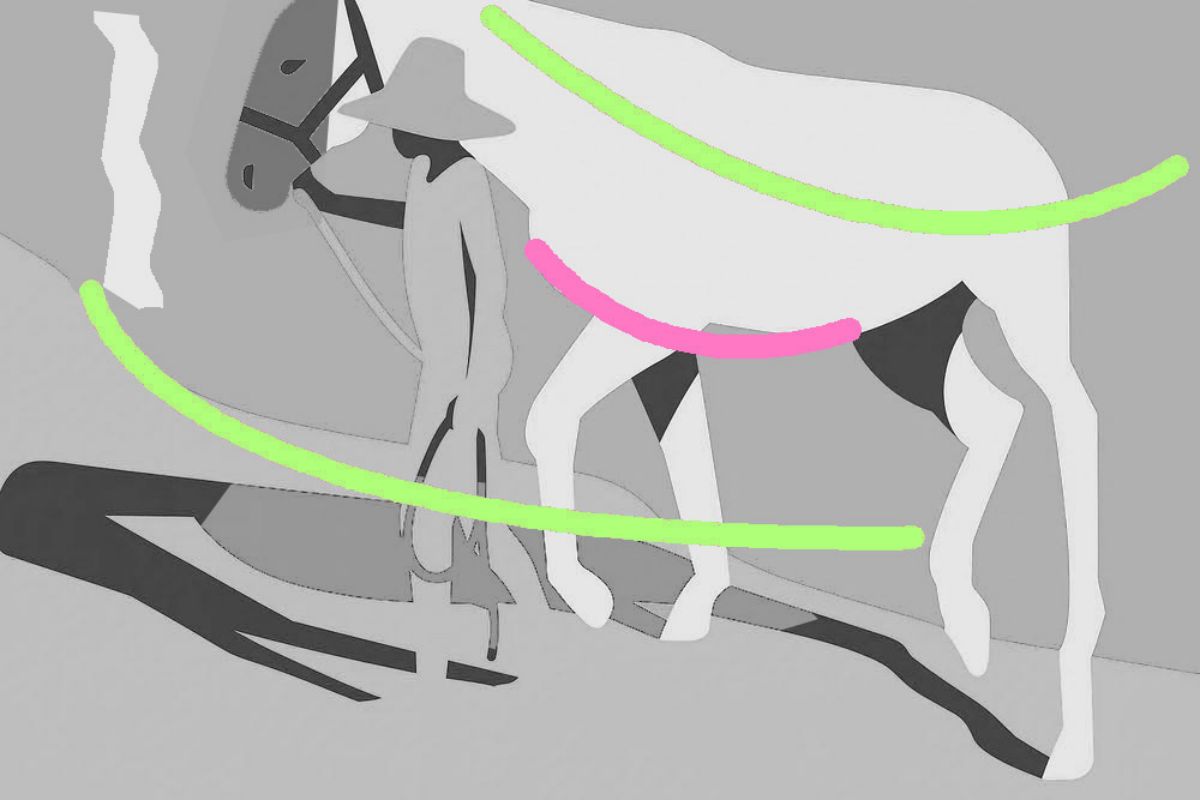
Values balance the horse’s brilliant whiteness against the darker boy and sea. This contrast builds depth and fixes the focal point on the animal. Lines of waves and reflections lead the gaze diagonally, structuring the scene’s rhythm. Composition alternates stable masses and liquid movement, harmonizing solidity and fluidity.
Rhythm of human, animal, and marine forms
The horse’s monumental, solid volumes confront the waves’ fluid suppleness and the slender human figure. Varied forms create a living dynamic, with the focal point strengthened by the direction of foam and motion lines. Alternating light and dark masses gives balance and intensity.
A sunny, energetic atmosphere
Hierarchy of values, a luminous focal point, and varied forms convey maritime vitality. Sorolla turns a daily act into a radiant image where sea energy, animal strength, and Mediterranean light fuse into a vibrant, timeless vision.
A copyist’s eye
Copying The Horse’s Bath means painting light in motion. Whites must vibrate without turning cold, modeled by warm reflections and colored shadows. Keep the brush free, following water’s flow and muscle tension. Each touch unites air, sea, and skin. Sorolla does not represent light: he lets it breathe.
This pictorial approach also informs the copies of Joaquin Sorolla’s works created in my studio.
Going Further
ARTISTE DE PARIS
Christian Denéchaud, artiste peintre
50 avenue des Champs Elysées
75008 Paris
SIRET 452248461
FR90452248461
.png?t=)
© Artiste de Paris . fr - 2026