
Millet’s The Gleaners: analysis and pictorial reading
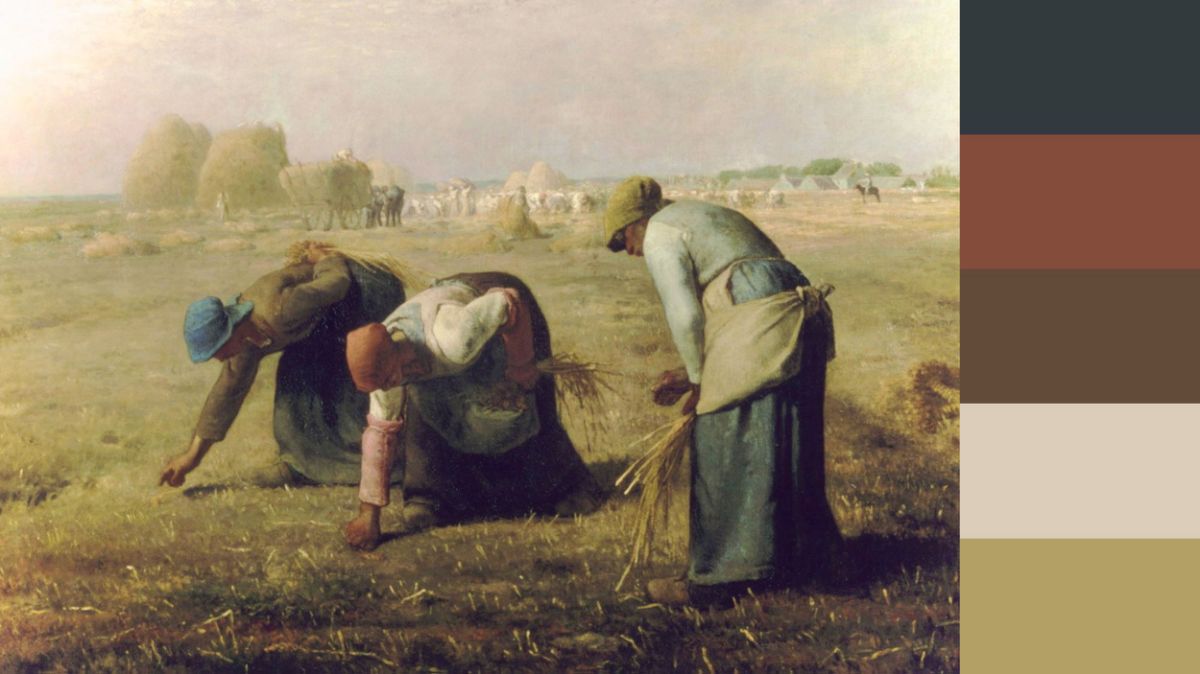
Painted in 1857, The Gleaners embodies Millet’s poetic realism. The artist elevates a rural subject—three women bent to collect leftover ears of grain—into a universal symbol of dignity and endurance. Through light and composition, he transforms the work scene into a silent meditation on the human condition.
This work may also be reproduced as a hand-painted copy, based on the original and respecting its color and composition.
Visual reading and composition
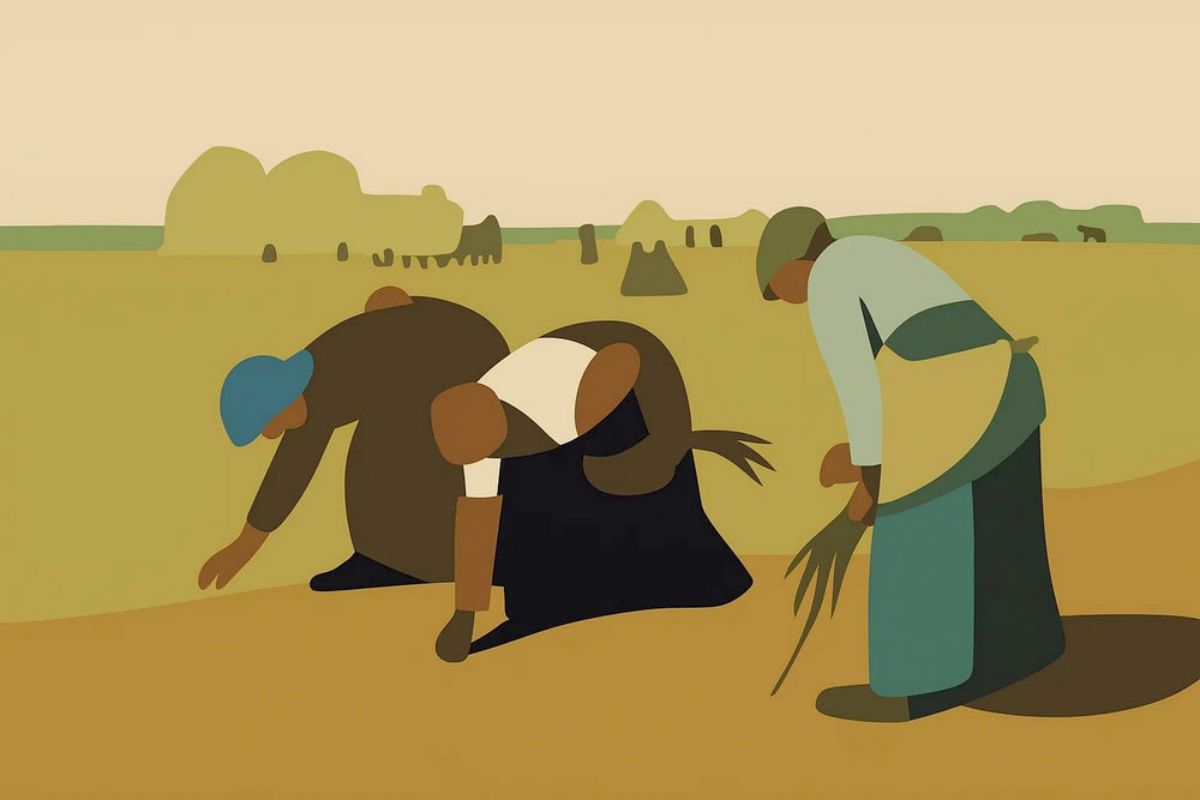
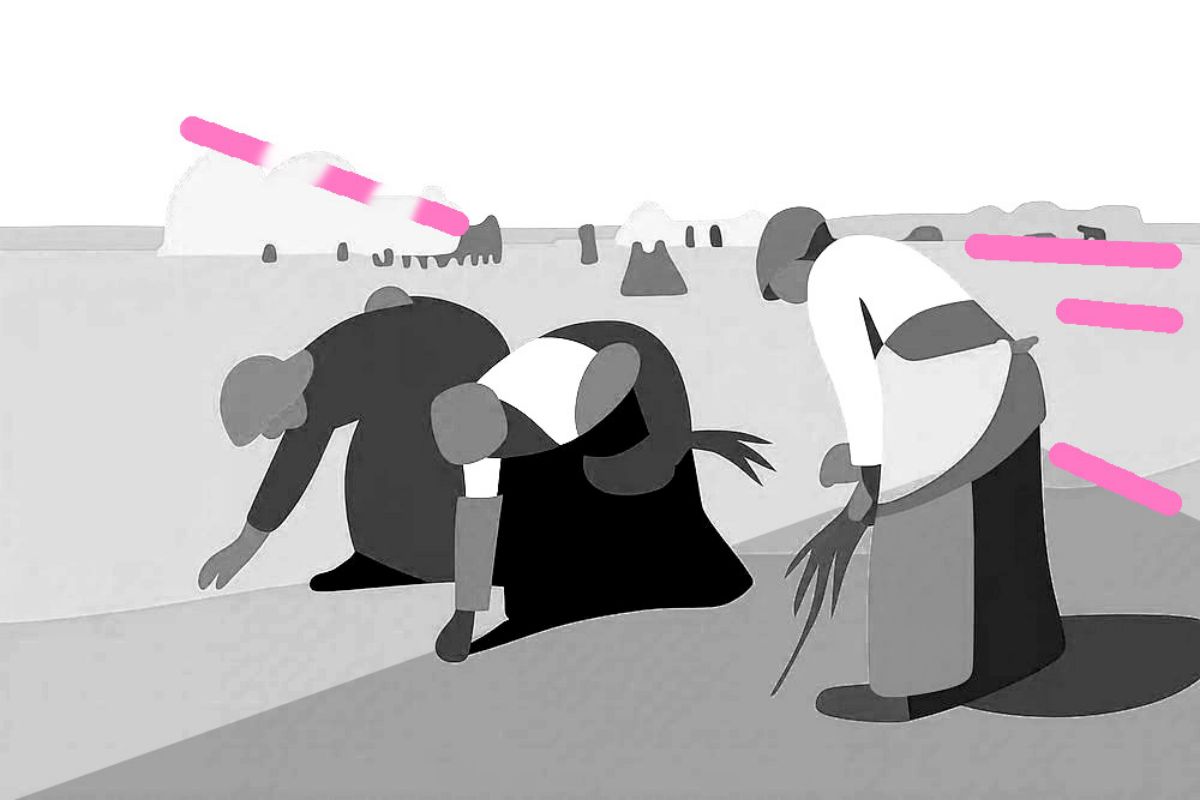
Values are hierarchized between the bright sky and distant fields and the darker zones of the bent bodies. This contrast places the focal point on the three female silhouettes, isolated within luminous space. The large, stable, monumental masses of the figures oppose the diffuse distance, creating tension between the intimate and the vast. The balance of planes strengthens legibility and gravity of the gesture.
The balance between peasant masses and the expanse of landscape
Forms alternate between large, stable masses—the bodies of the gleaners—and the more diffuse background animated by harvest and workers. The focal point is reinforced by the monumental size of the silhouettes, disproportionate to the distance. Thus the composition contrasts the rigor of human forms with the broad, fluid field, creating tension between detail and immensity.
An atmosphere of gravity and respect
The combination of value contrasts, the clear focal point, and opposing forms conveys dignity and seriousness. Millet transforms a humble gesture into a monumental image, granting peasant life a silent aura of strength and respect.
A copyist’s eye
Copying The Gleaners requires restraint. Shadows must stay supple; earthy tones should vibrate without heaviness. Each fold and gesture is built by calm layers. Discreet light should reveal without judging. The challenge is to unite truth and emotion without emphasis. In painting, one understands that Millet does not show misery; he paints the dignity of work.
This pictorial approach can be found in the hand-painted reproductions created in the studio.
Going Further
ARTISTE DE PARIS
Christian Denéchaud, artiste peintre
50 avenue des Champs Elysées
75008 Paris
SIRET 452248461
FR90452248461
.png?t=)
© Artiste de Paris . fr - 2026