
La Tour’s The Cheat with the Ace of Diamonds: pictorial analysis and baroque reading
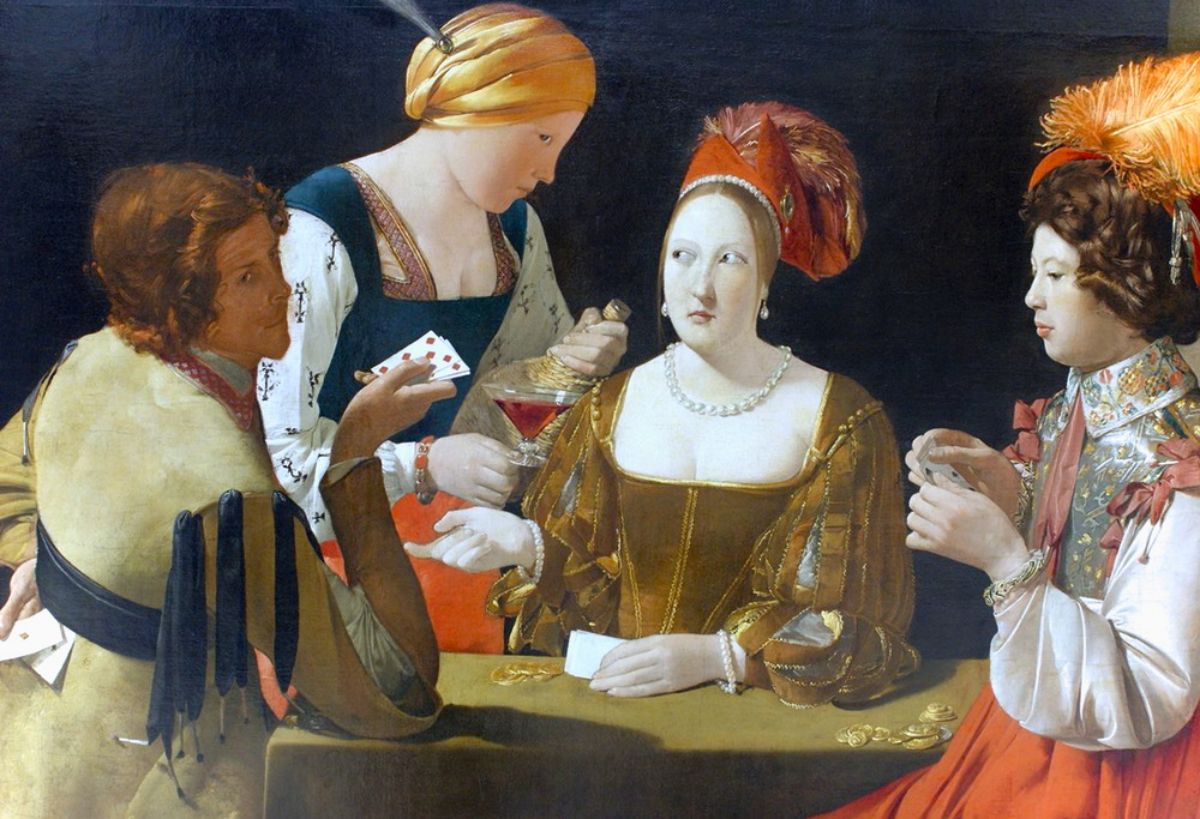
Painted around 1635, The Cheat with the Ace of Diamonds reveals Georges de La Tour’s mastery of narrative chiaroscuro. Beneath apparent calm, the artist constructs a silent tension where daily life becomes moral allegory. Each figure, bathed in lateral light, participates in both psychological and pictorial drama.
This work may also be reproduced as a hand-painted copy, based on the original and respecting its color and composition.
Visual reading and composition
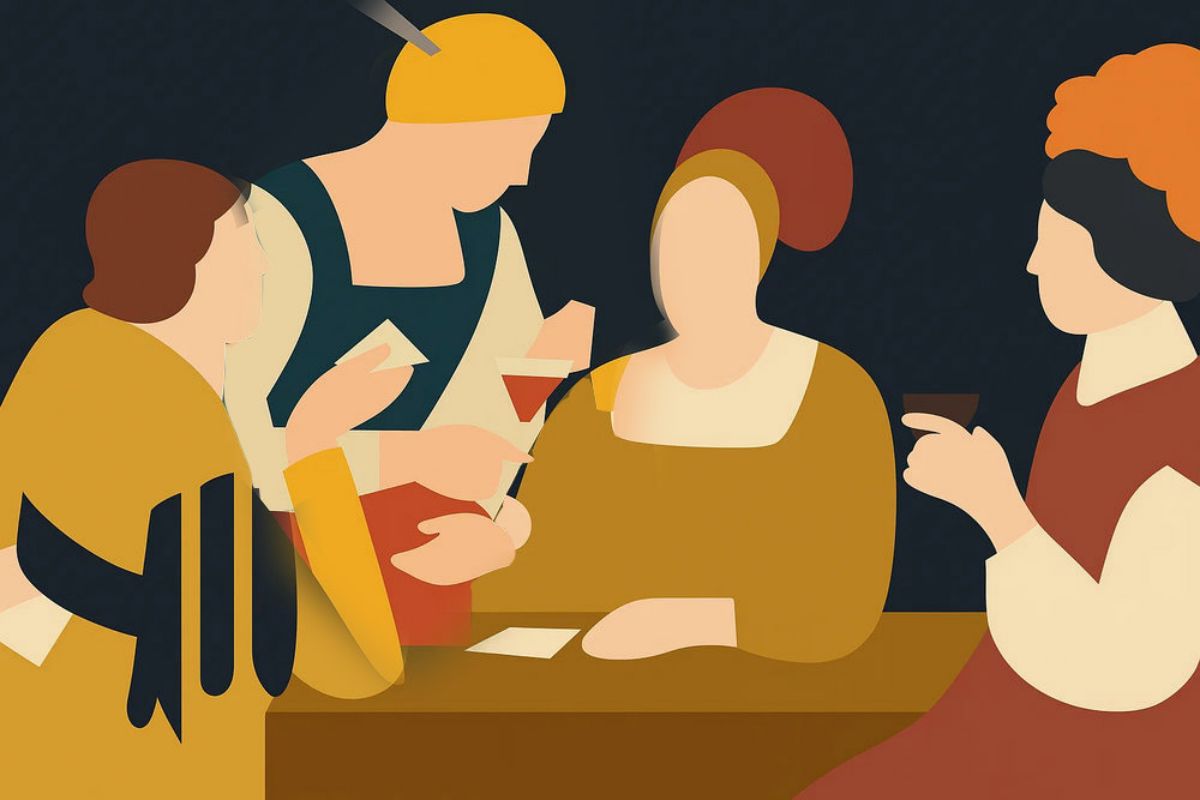
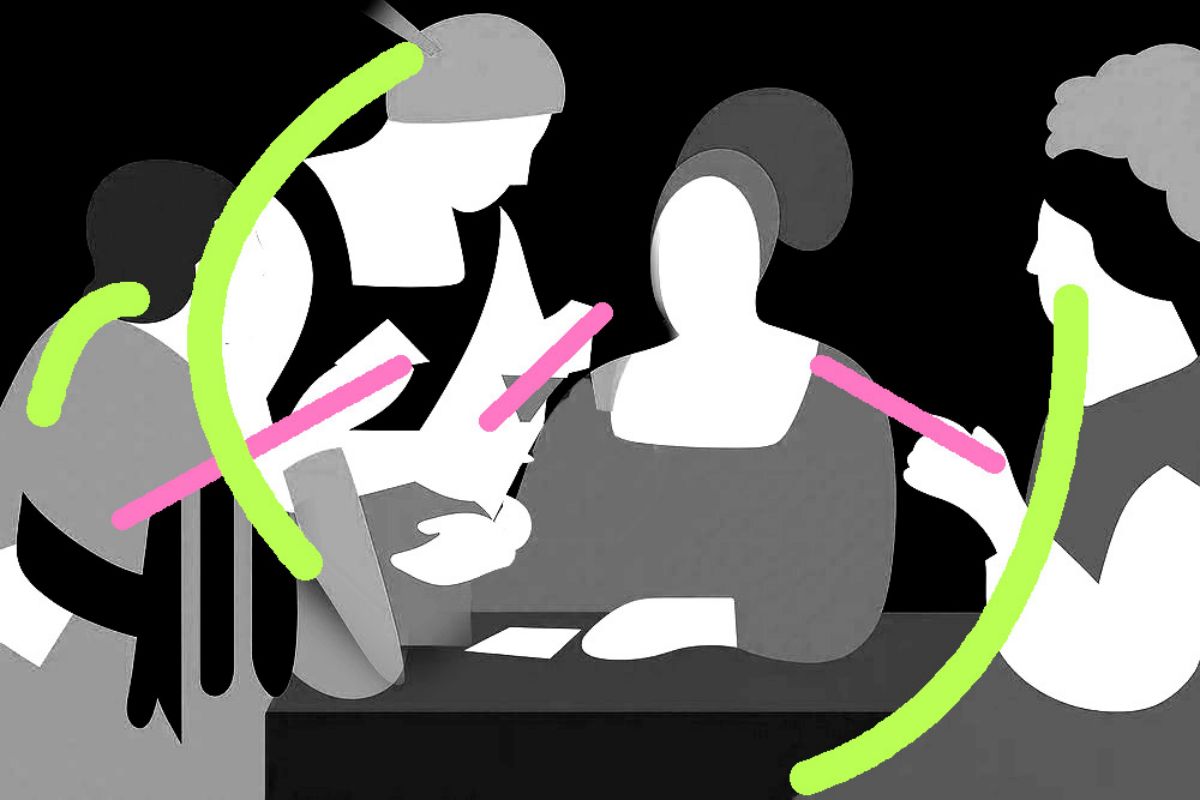
Values oppose the lit faces and hands to a dark background, structuring the scene around the cheater’s gesture. Diagonals formed by arms and cards drive the composition and guide the gaze to the action’s core. Light here does more than illuminate — it isolates, connects, dramatizes. Unity arises from this precise interplay of light and shade.
Focal point and compositional tension
The focal point lies in the cheat’s hidden hand holding the ace. Crossed gazes and body placement lead the eye toward this revealing gesture. The diagonals of arms and cards add dynamic energy that sharpens suspense.
Atmosphere and meaning
Through contrasting values, focus on deceitful gesture, and careful composition, La Tour turns an everyday card game into moral theater. The scene expresses cunning, naivety, and human passion — giving universal depth to a moment of deception.
A copyist’s eye
Copying this La Tour is learning the discipline of silent light. Transitions between brightness and shadow must remain smooth, sculpted rather than painted. Faces demand calm modeling built from thin layers of warm and cool tones. The hand follows compositional tension — everything converges on the cheater’s move. One feels the light does more than reveal the scene — it unveils its moral truth.
This pictorial approach also informs the copies of Georges de La Tour’s works created in my studio.
Going Further
ARTISTE DE PARIS
Christian Denéchaud, artiste peintre
50 avenue des Champs Elysées
75008 Paris
SIRET 452248461
FR90452248461
.png?t=)
© Artiste de Paris . fr - 2026