
Botticelli’s The Birth of Venus: pictorial analysis and Renaissance reading
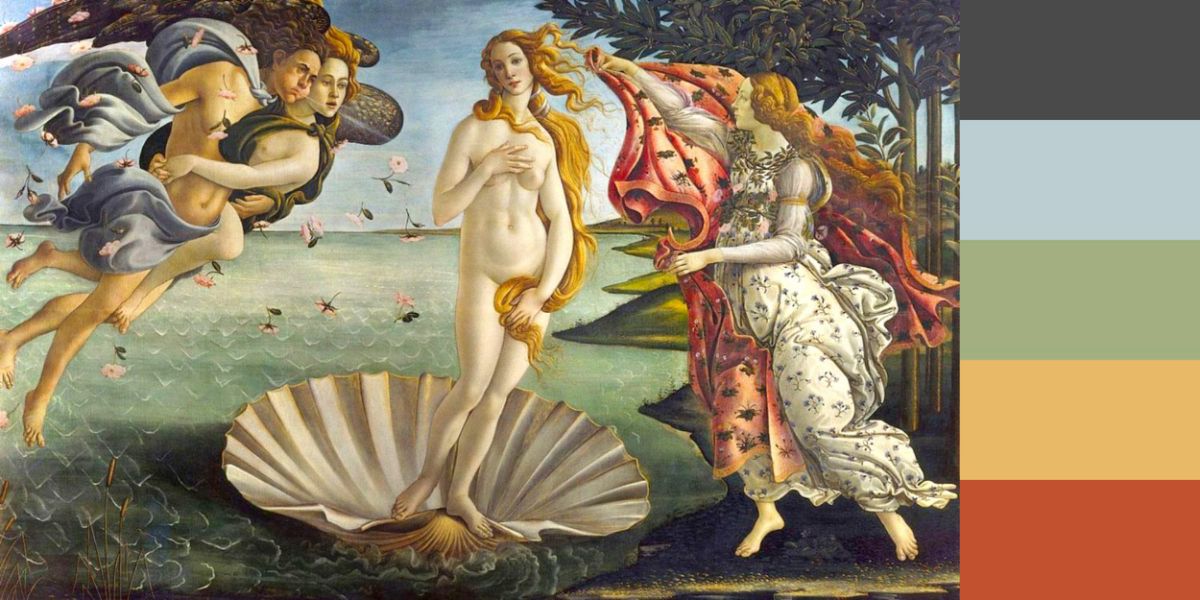
Painted around 1485 for the Medici, The Birth of Venus epitomizes Florentine Renaissance ideals. Botticelli unites myth, poetry, and divine beauty. The goddess, carried by the winds, symbolizes harmony between nature and spirit — the perfection of human form and soul.
This work may also be reproduced as a hand-painted copy, based on the original and respecting its color and composition.
Visual reading and composition
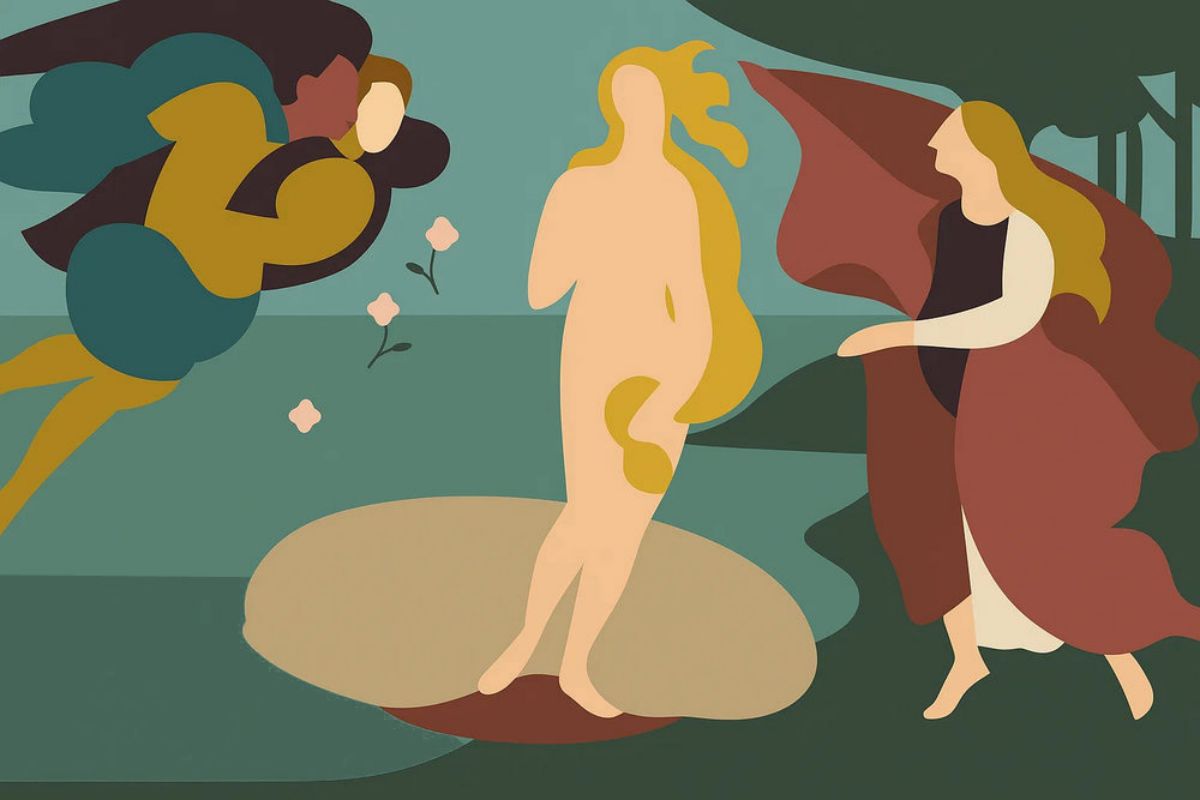
Values oppose Venus’s luminous skin to deeper tones of sea, sky, and drapery. This luminous hierarchy centers the divine figure. Flowing wind and fabric lines form a circular motion balancing her vertical stance. Geometry and rhythm serve grace.
Focal point and gaze structure
The focal point lies in Venus’s standing figure at the center. Wind-blown figures and the offered mantle converge toward her. The balance between vertical calm and lateral motion ensures fluid, ordered reading.
Atmosphere and message
Through value contrasts, central focus, and graceful rhythm, Botticelli expresses an ideal of beauty transcending myth. The work becomes an image of Renaissance humanism — harmony between nature, divinity, and perfect form.
A copyist’s eye
Copying The Birth of Venus means seeking lightness of modeling without losing purity of line. Flesh is built through transparent layers; contours remain supple yet firm. Each hue keeps serenity and clarity. In painting it, one sees Botticelli depicts not the body but the idea — beauty as harmony between light and spirit.
This pictorial approach also informs the copies of Sandro Botticelli’s works created in my studio.
Going Further

ARTISTE DE PARIS
Christian Denéchaud, artiste peintre
50 avenue des Champs Elysées
75008 Paris
SIRET 452248461
FR90452248461
.png?t=)
© Artiste de Paris . fr - 2026