
Rousseau’s The Dream: pictorial analysis and dreamlike reading
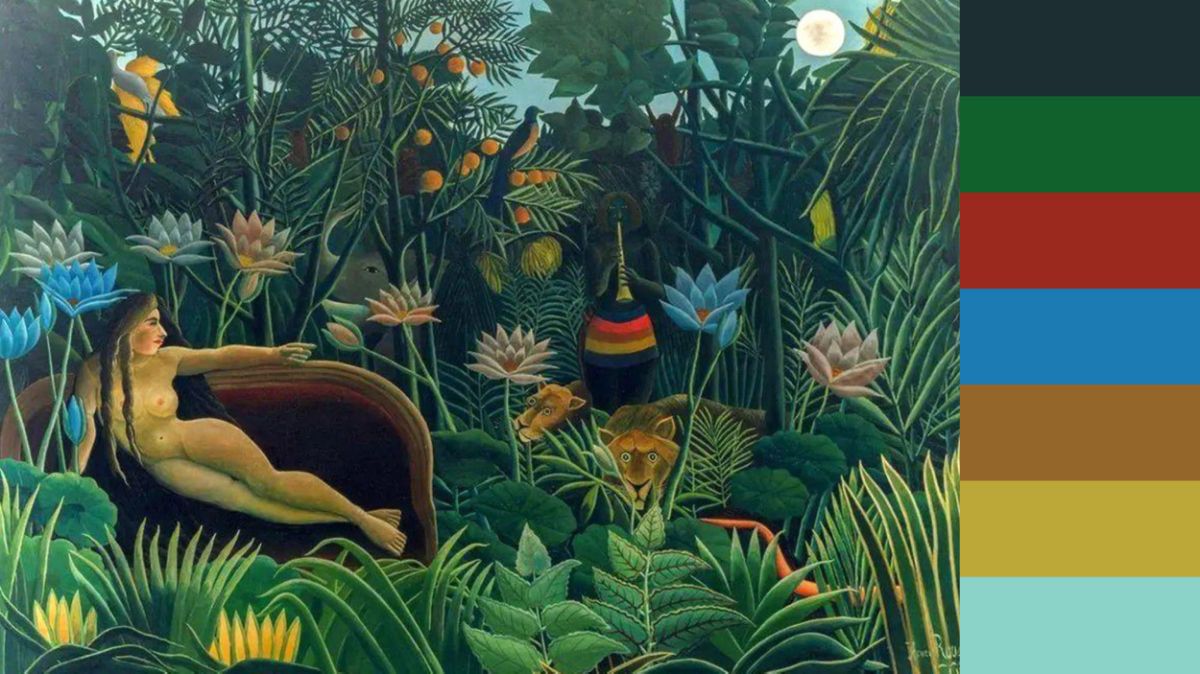
Presented in 1910, The Dream is one of Henri Rousseau’s final masterpieces. The artist evokes a world that is both naïve and mystical: a woman reclining on a couch appears to float at the heart of an imaginary jungle. Rousseau asserts total freedom from convention, mixing meticulous realism with poetic vision.
This work may also be reproduced as a hand-painted copy, based on the original and respecting its color and composition.
Visual reading and composition
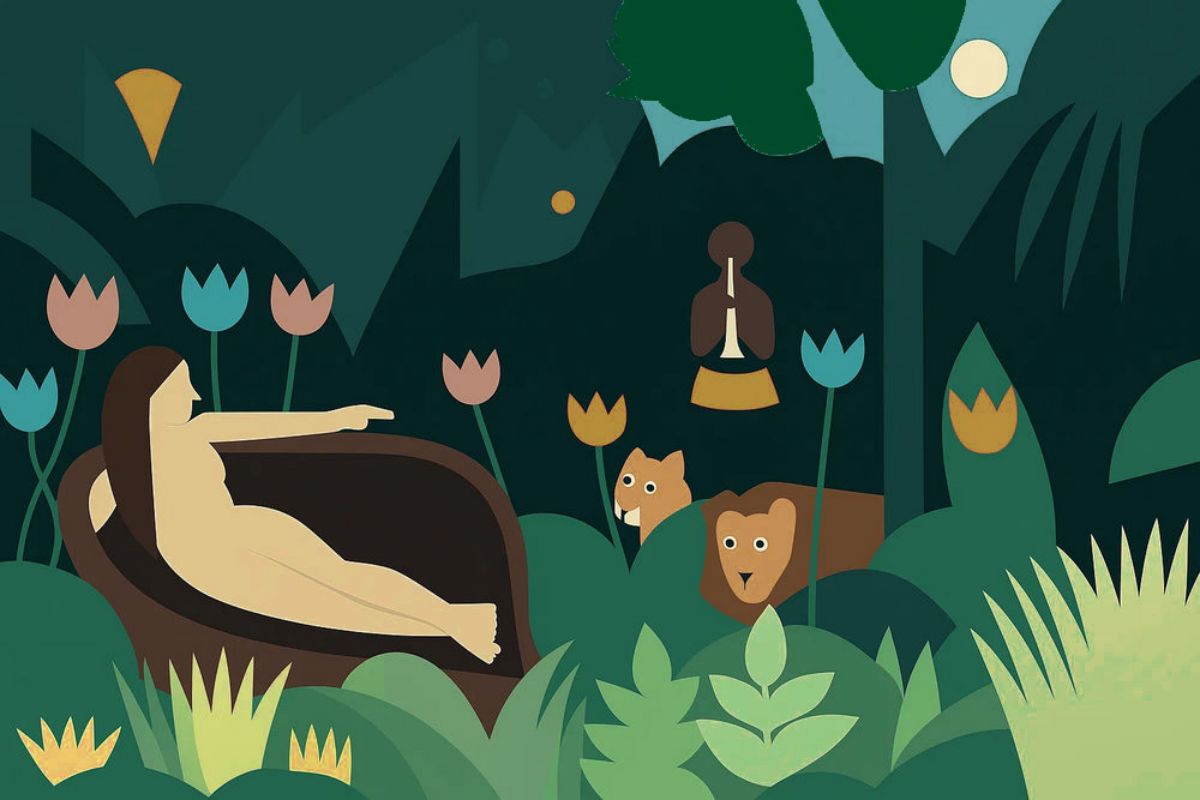
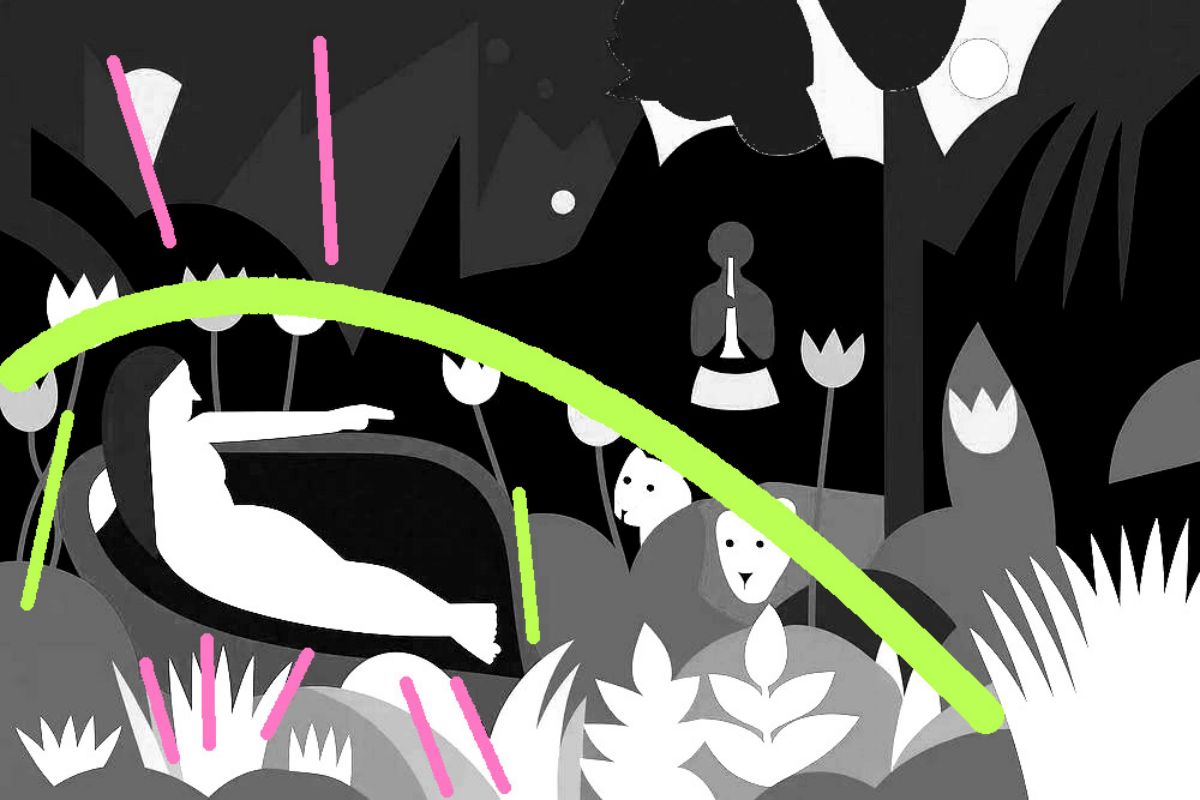
The large dark masses of vegetation frame the lightness of the nude figure and the couch. This contrast of values clarifies the scene despite abundant detail. The sinuous lines of leaves and branches lead the viewer’s eye toward the central figure, while scattered animals animate the space. The composition balances density and lightness, precision of line and fluidity of dream.
Focal point and organisation of the gaze
The focal point is the female figure on the left-centre, whose luminous skin stands out against the lush surroundings. The lines of the foliage and animals guide the eye toward her while encouraging exploration of the jungle’s depth. The whole combines mystery with visual clarity.
Atmosphere and visual message
Through contrasting values, a centred focal point and repeated vegetal forms, Rousseau composes a vision that is both strange and poetic. The scene expresses the intrusion of dream into reality: the woman seems to float within an imagined landscape where nature becomes both décor and symbol. The painting offers a naïve yet powerful meditation on imagination and the unconscious.
A copyist’s eye
Reproducing The Dream means approaching the rigour hidden beneath its apparent naïveté. Each tone must be placed cleanly, without overmixing, to preserve the clarity of surfaces. The rhythm of the leaves requires a regular, almost musical gesture that organises the profusion. The figure demands calm light — soft yet sharp against deep green. Copying this work reveals that Rousseau is not painting nature, but the memory of a dream: a suspended space between lucidity and enchantment.
This pictorial approach also informs the copies of Henri Rousseau’s works created in my studio.
Going Further
ARTISTE DE PARIS
Christian Denéchaud, artiste peintre
50 avenue des Champs Elysées
75008 Paris
SIRET 452248461
FR90452248461
.png?t=)
© Artiste de Paris . fr - 2026