
Géricault’s The Raft of the Medusa: analysis and pictorial reading
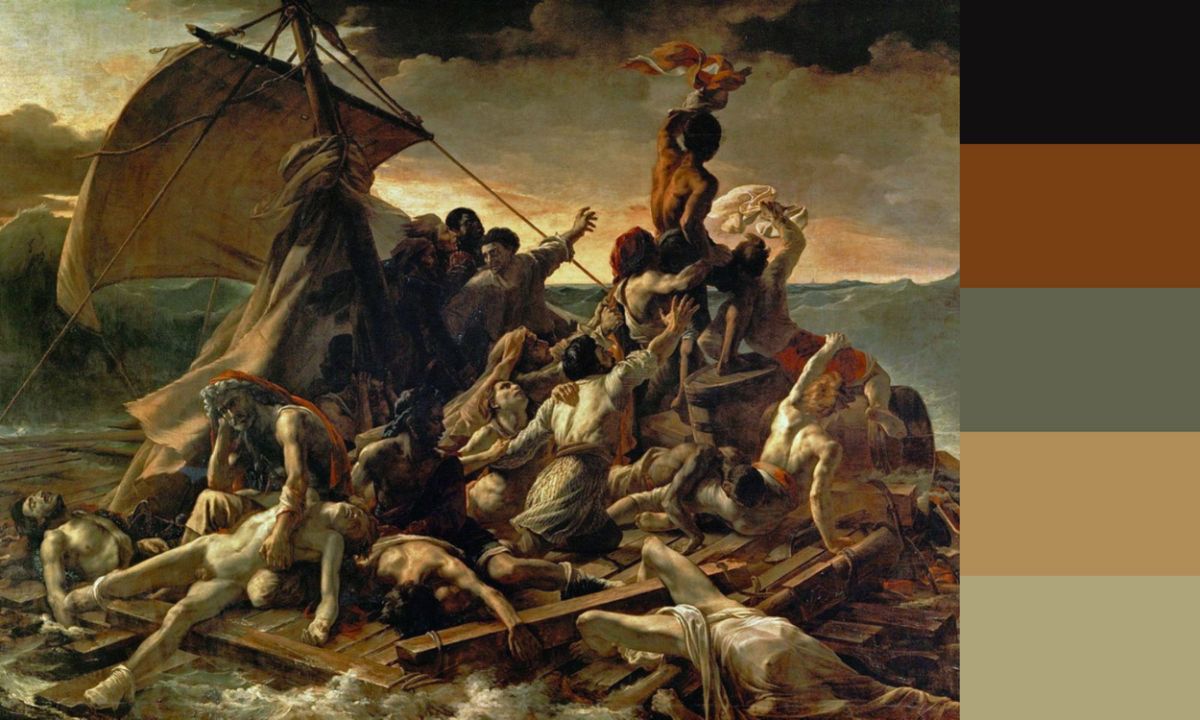
Shown at the 1819 Salon, The Raft of the Medusa ushered contemporary tragedy into grand history painting. Inspired by the 1816 shipwreck, Géricault fuses tragic realism with heroic construction. Monumental in scale, the work unites anatomical truth and universal emotion, turning human despair into a sublime pictorial subject.
This work may also be reproduced as a hand-painted copy, based on the original and respecting its color and composition.
Visual reading and composition
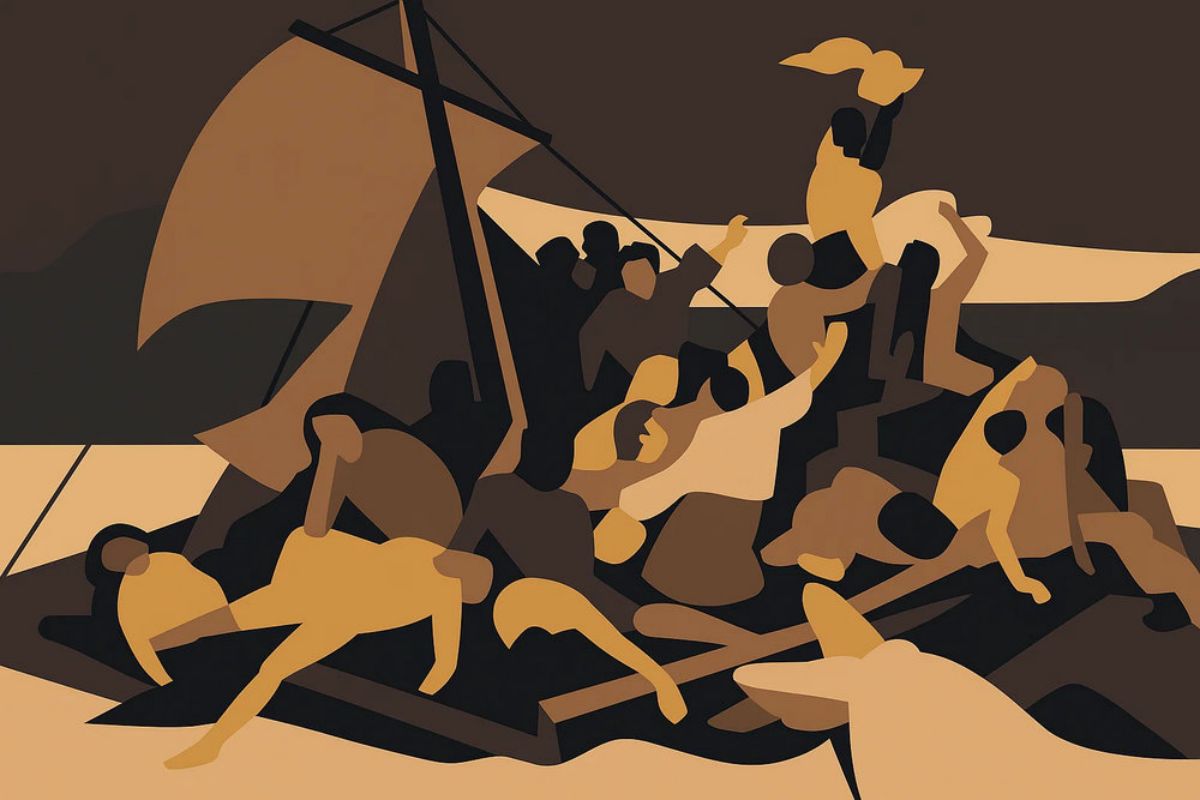
Values clash violently: the darkness of sea and sky contrasts with the brightness of illuminated bodies. This dramatic play guides the eye to the top of the raft, where a group waves cloth toward the horizon. The pyramidal composition, rising from corpses to the figure of salvation, intensifies the upward tension. Powerful body forms and the broken diagonals of sails heighten the tragic dynamic, transforming the scene into a surge toward survival.
The role of forms and the composition’s upward tension
Human masses are organized as a pyramid, from inert bodies at the bottom to figures straining toward the horizon. The focal point is strengthened by this ascending construction and by the dynamic diagonal crossing the composition. Forms range from robust body volumes to the broken lines of sails and raft, accentuating the dramatic rhythm.
An atmosphere of despair and hope
The combination of contrasted values, the focal point aimed at the horizon, and the pyramidal construction conveys a double emotion: suffering and the hope of rescue. Géricault transforms a news event into a universal vision in which humanity confronts death yet still reaches toward life.
A copyist’s eye
Copying The Raft of the Medusa is like facing a storm in paint. The contrasts must remain extreme without becoming crude. Pale flesh is built on dark foundations through transparencies and glazes. Every brushstroke must express weight, effort, struggle. The risk is to paint the scene; one must paint the tragedy. In painting, one understands that Géricault does not describe the shipwreck; he paints human resistance.
This pictorial approach can be found in the hand-painted reproductions created in the studio.
Going Further

ARTISTE DE PARIS
Christian Denéchaud, artiste peintre
50 avenue des Champs Elysées
75008 Paris
SIRET 452248461
FR90452248461
.png?t=)
© Artiste de Paris . fr - 2026