
Rigaud’s Portrait of Louis XIV in Coronation Robes: analysis and pictorial reading
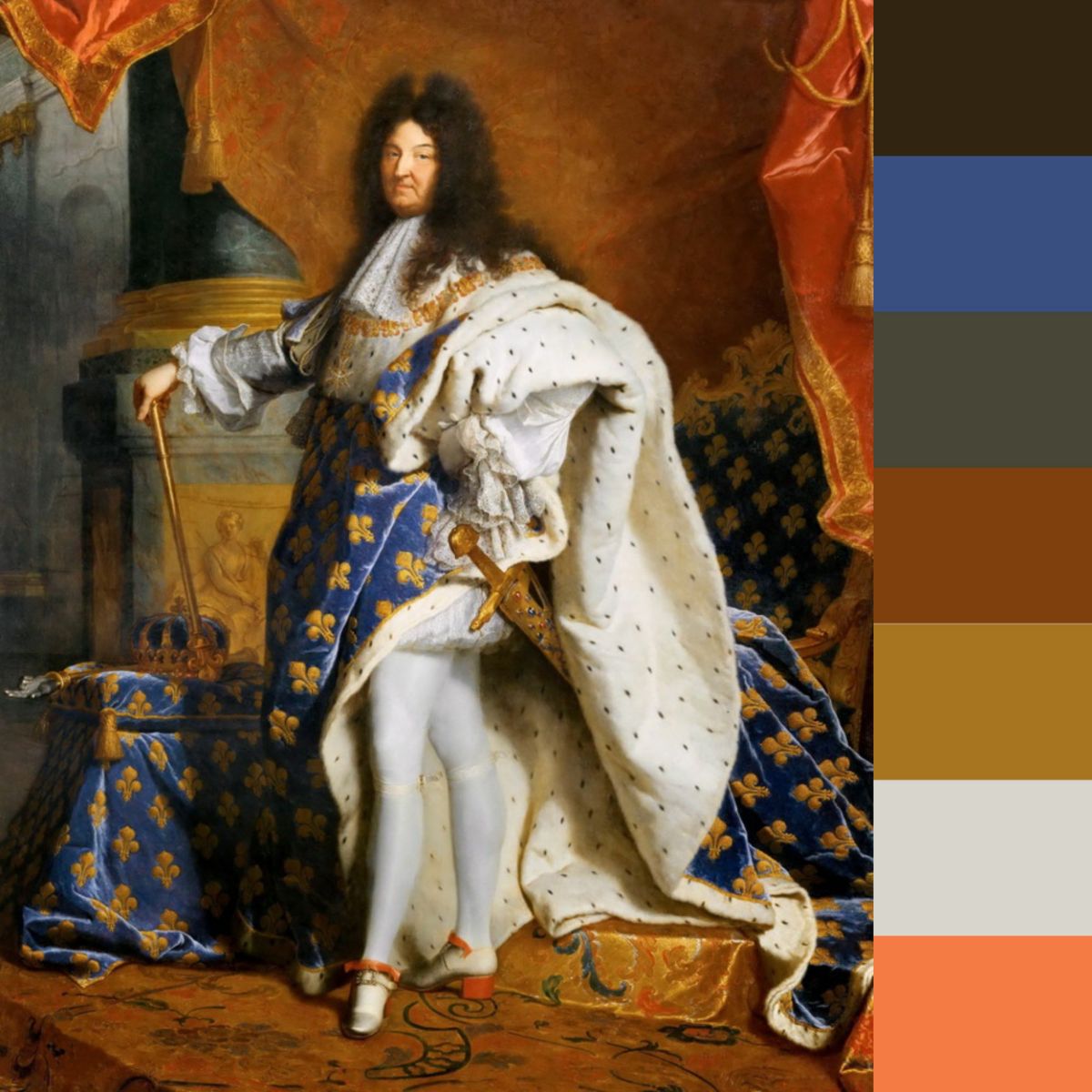
Painted in 1701 at the close of the Grand Siècle, the Portrait of Louis XIV became the emblematic image of monarchical power. Rigaud imposes a model of official representation: splendor of dress, balanced values, and absolute hierarchy of the gaze. Everything contributes to making this portrait both a political symbol and a work of art.
This work may also be reproduced as a hand-painted copy, based on the original and respecting its color and composition.
Visual reading and composition
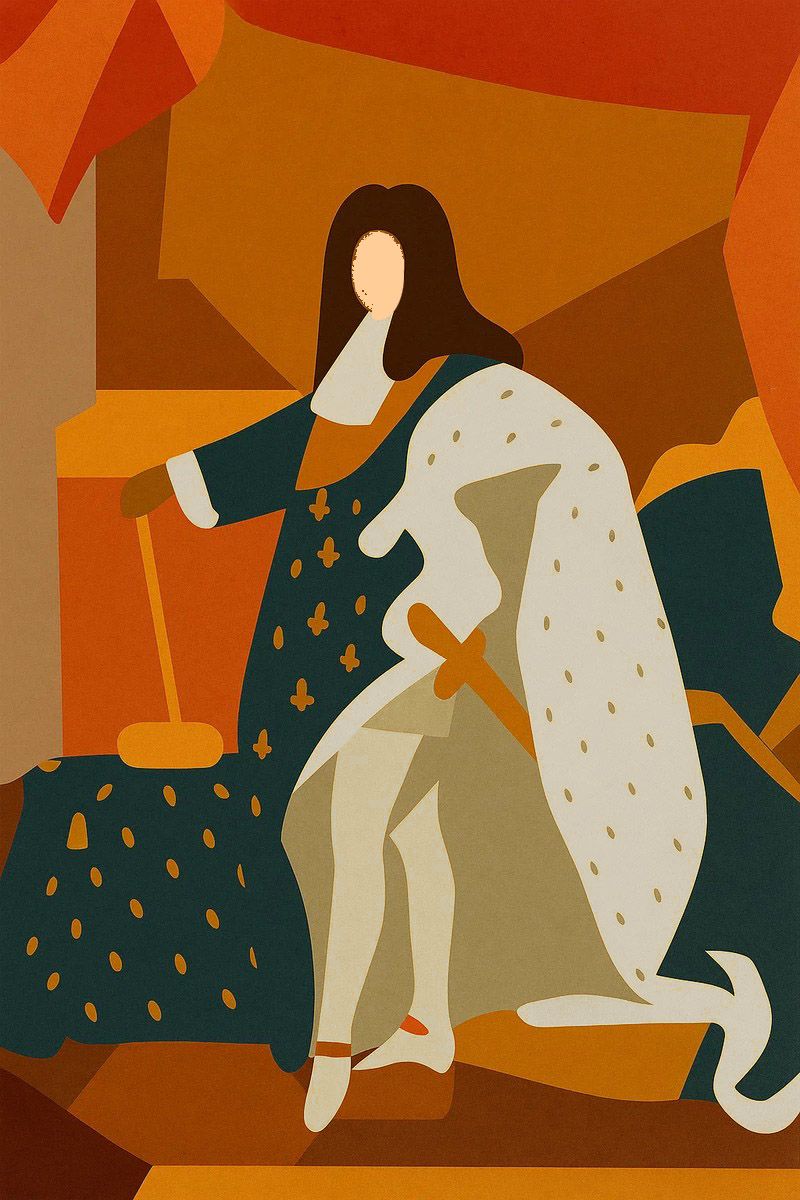
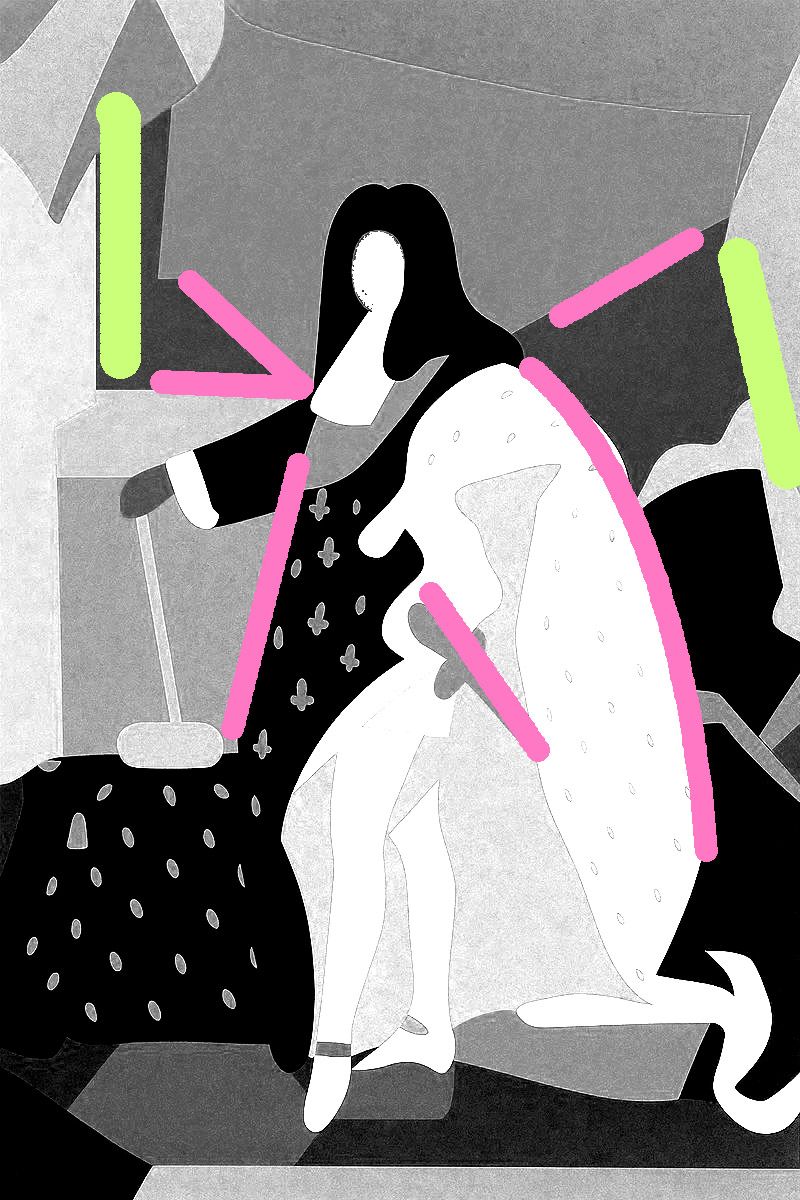
Values are organized between the radiant brightness of face, wig, and ermine and the darker zones of background and drapery. This contrast fixes the focal point on the king, visual and symbolic center. The vertical lines of column and mantle heighten the monarch’s stature. Alternation between dark masses and bright details creates a balanced rhythm where each element reinforces majesty.
Harmony of forms and the composition’s monumentality
The sovereign’s tall silhouette dominates the space, supported by the column’s verticals and the sweeping draperies. The focal point is reinforced by the gesture of the arm holding the scepter and by the contrast between the dark mantle and bright face. Forms alternate between large textile masses and refined details, producing a sumptuous yet balanced rhythm.
An atmosphere of majesty and power
The combination of contrasted values, a monarch-centered focal point, and monumental forms conveys grandeur and authority. Rigaud transforms a portrait into a political manifesto, where Baroque staging expresses the full majesty of royal power.
A copyist’s eye
Copying Rigaud’s Louis XIV is to confront the perfection of pictorial power. Light must exalt without flattering; whites must stay dense without hardness. Velvet and ermine require patient blending where each highlight matters. The danger is to lose vitality under the splendor: beneath the pomp, presence must remain. In painting, one understands that Rigaud does not portray a man—he paints the very idea of kingship.
This pictorial approach can be found in the hand-painted reproductions created in the studio.
Going Further
ARTISTE DE PARIS
Christian Denéchaud, artiste peintre
50 avenue des Champs Elysées
75008 Paris
SIRET 452248461
FR90452248461
.png?t=)
© Artiste de Paris . fr - 2026