
Manet’s Olympia: analysis and pictorial reading
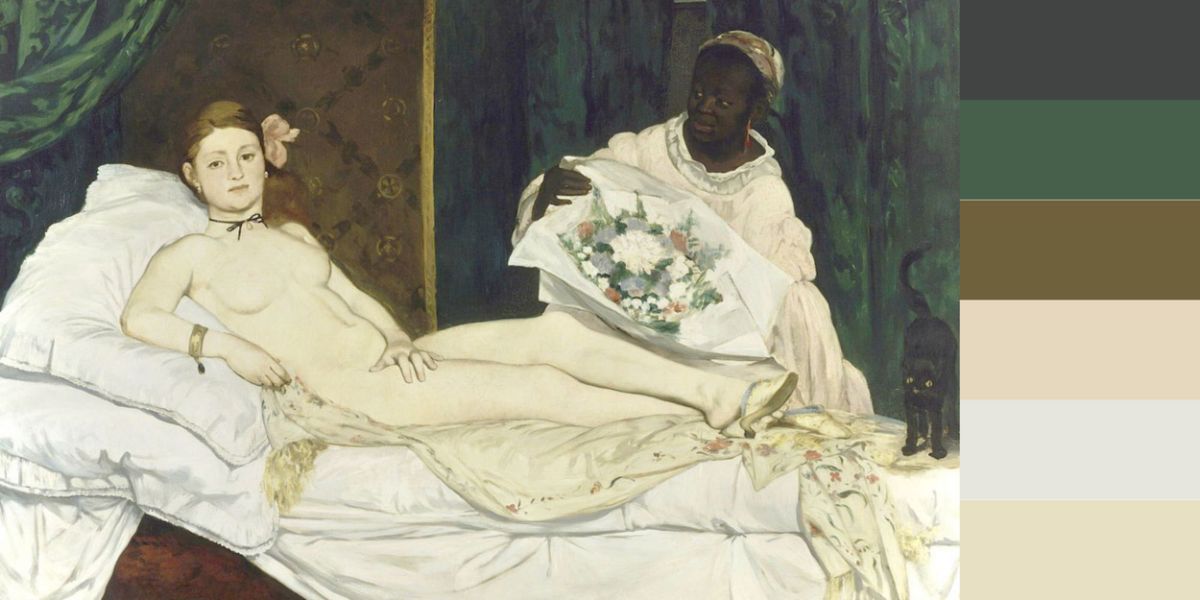
Shown at the 1865 Salon, Olympia upended the codes of the academic nude. Manet replaces the mythological goddess with a real woman, fully aware of her body and gaze. Through raw light, frontality, and simplified forms, he marks a decisive break between tradition and modernity, making painting an act of truth as much as an aesthetic gesture.
This work may also be reproduced as a hand-painted copy, based on the original and respecting its color and composition.
Distribution of values and lighting of the nude
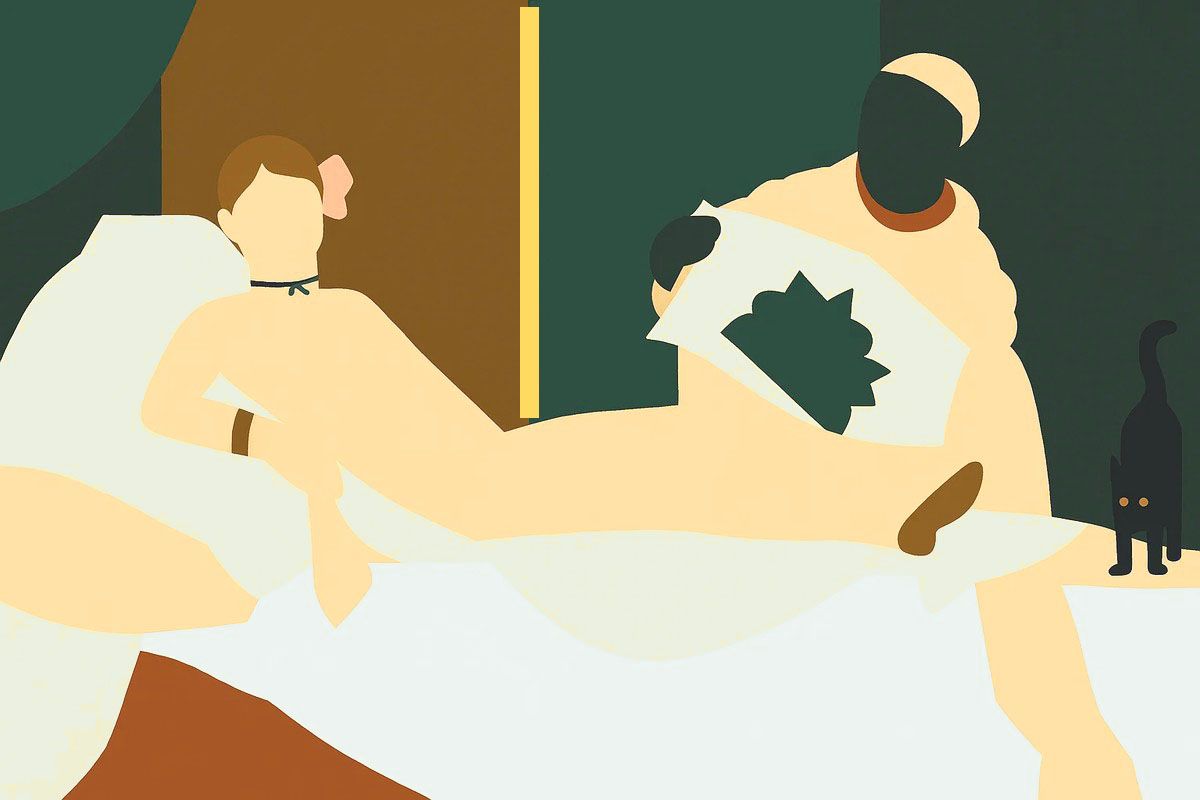
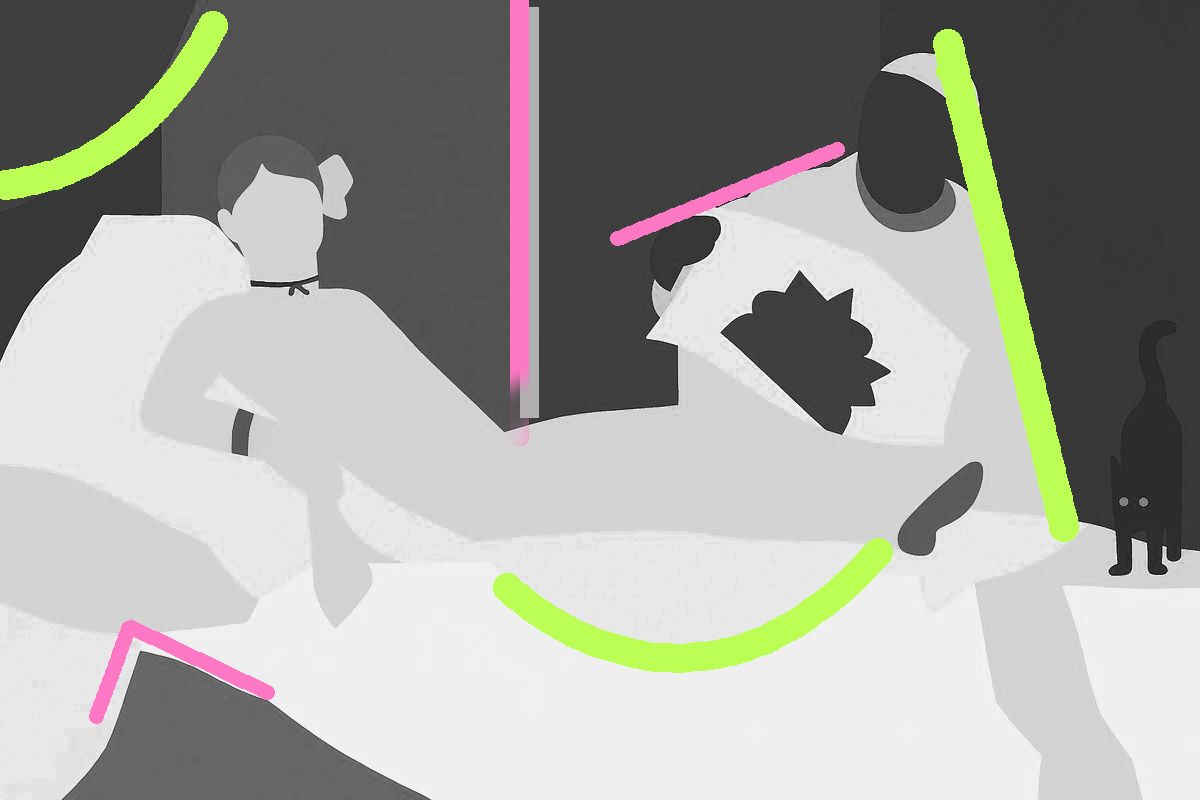
Values are organized between the blazing brightness of the woman’s body and the dark zones of bed, curtain, and maid. This contrast fixes the focal point on the main figure, whose skin captures light with unprecedented frankness. The hierarchy of tones underscores the subject’s frontality and the model’s isolation, poised between shadow and gaze.
The role of forms and emphasis on frontality
The elongated silhouette, with clear, assertive contours, stands apart from the softer, secondary forms of the background. The focal point is reinforced by the woman’s direct gaze at the viewer. The opposition between large light masses and dark details—flowers, ribbon, cat—creates a visual rhythm that animates the scene.
An atmosphere of provocation and modernity
The combination of value contrasts, a frontal focal point, and simplified forms conveys an impression of raw truth and challenge. Manet breaks with the idealized nude to impose a provocative modernity, transforming a classical subject into a pictorial manifesto.
A copyist’s eye
Copying Olympia means seeking naked correctness—neither flattering nor dramatizing. The skin must breathe in its cool light; shadows must stay transparent. Every touch counts: blend too much and the force fades. The challenge is to assume raw light, that unvarnished truth Manet imposes with almost pitiless clarity.
This pictorial approach also informs the copies of Edouard Manet’s works created in my studio.
Going Further
ARTISTE DE PARIS
Christian Denéchaud, artiste peintre
50 avenue des Champs Elysées
75008 Paris
SIRET 452248461
FR90452248461
.png?t=)
© Artiste de Paris . fr - 2026