
Munch’s The Scream: pictorial analysis and symbolist reading
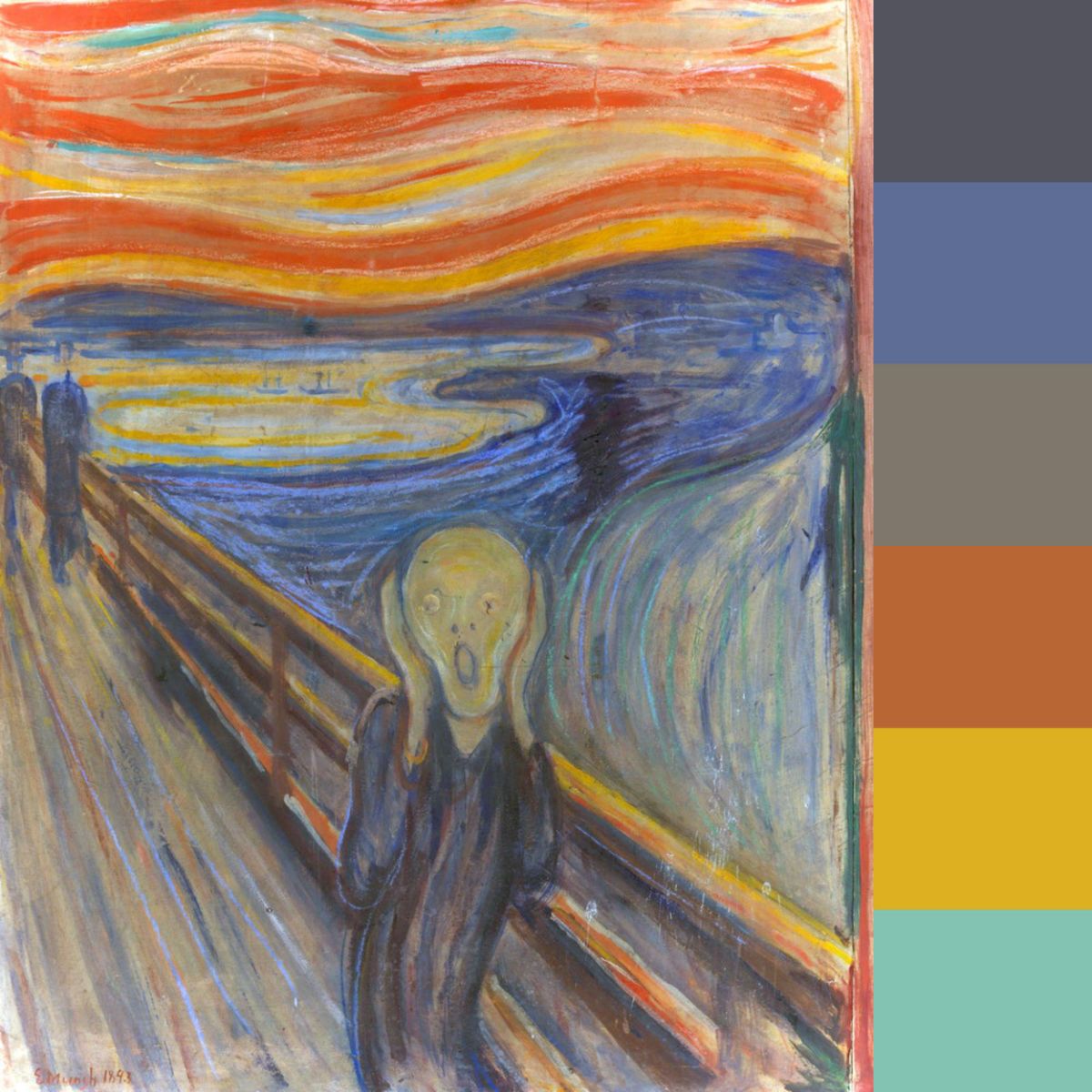
Painted in 1893, The Scream is perhaps Edvard Munch’s most iconic work. Inspired by a panic attack he experienced on a road in Oslo, the painting expresses inner turmoil through distorted forms and colours. The artist abandons fidelity to reality to explore painting as a direct expression of psychological states.
This work may also be reproduced as a hand-painted copy, based on the original and respecting its color and composition.
Visual reading and composition
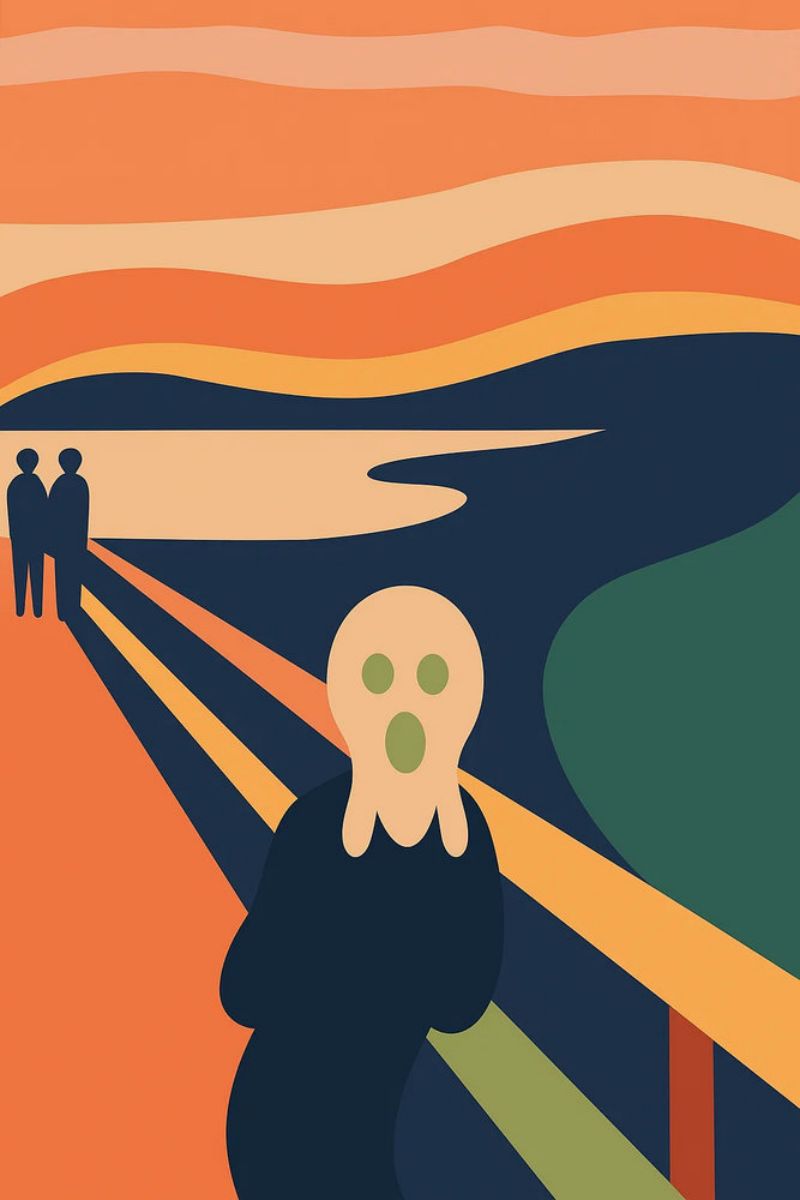
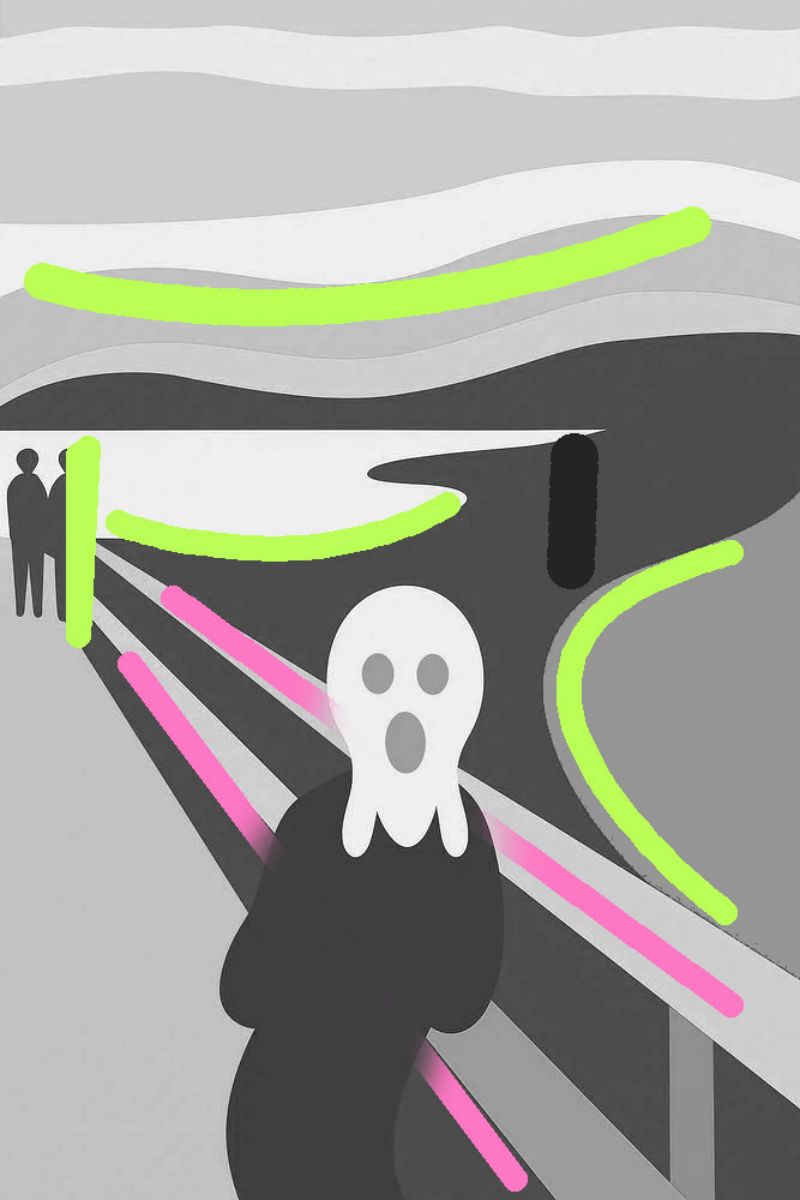
The values oppose the glowing red sky to the dark blues and browns of the fjord. This chromatic tension makes the central figure burst forth in the foreground. The lines of the bridge and the curves of the landscape converge toward the fixed face, creating a circular movement that encloses the scene. The composition rests on instability: everything vibrates, nothing settles, as if the entire world were participating in the scream.
Focal point and organisation of the gaze
The focal point lies on the foreground figure: its pale face and hands clasping the head immediately capture attention. The oblique lines of the bridge and the undulating landscape guide the eye toward this centre of terror. The tightened composition traps the viewer in the visual experience of anxiety.
Atmosphere and visual message
Through contrasting values, an obsessive focal point and distorted forms, Munch expresses universal anguish. He does not aim to depict reality, but to give form to inner dread. The painting becomes a visual metaphor for human existence, where nature and individual merge into a silent scream.
A copyist’s eye
Copying The Scream means confronting a painting in which form arises from raw emotion. Transitions aim not for softness but for intensity: tones must collide without muddying. The rhythm of the lines demands a free, almost nervous gesture that sustains visual tension. While painting, one realises that Munch does not describe a scream — he paints it: each colour is a psychic vibration, each curve a pulse of anxiety.
This pictorial approach can be found in the hand-painted reproductions created in the studio.
Going Further
ARTISTE DE PARIS
Christian Denéchaud, artiste peintre
50 avenue des Champs Elysées
75008 Paris
SIRET 452248461
FR90452248461
.png?t=)
© Artiste de Paris . fr - 2026