
Manet’s Luncheon on the Grass: analysis and pictorial reading
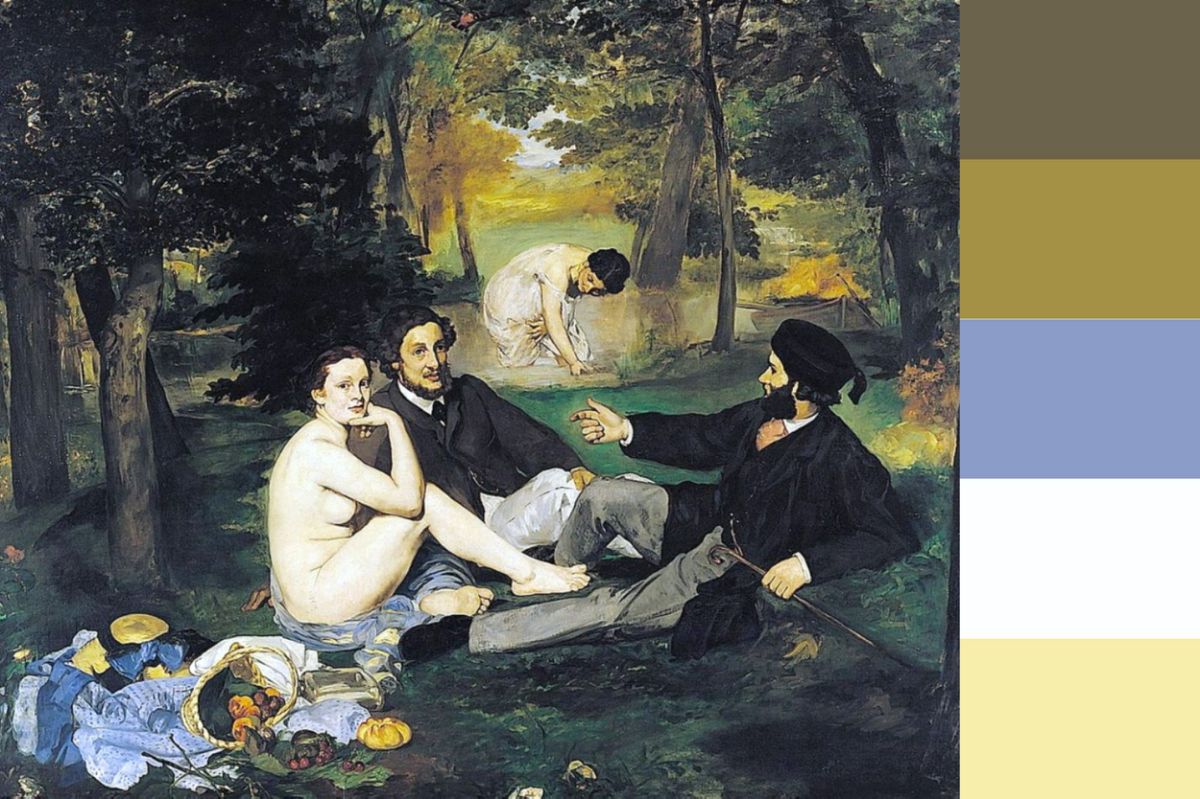
Shown at the 1863 Salon des Refusés, Luncheon on the Grass shocked for its theme and form. Manet confronts old-master tradition with a contemporary scene, turning plein-air leisure into a manifesto. Clear light and willfully dissonant construction mark the birth of modernity.
This work may also be reproduced as a hand-painted copy, based on the original and respecting its color and composition.
Visual reading and composition
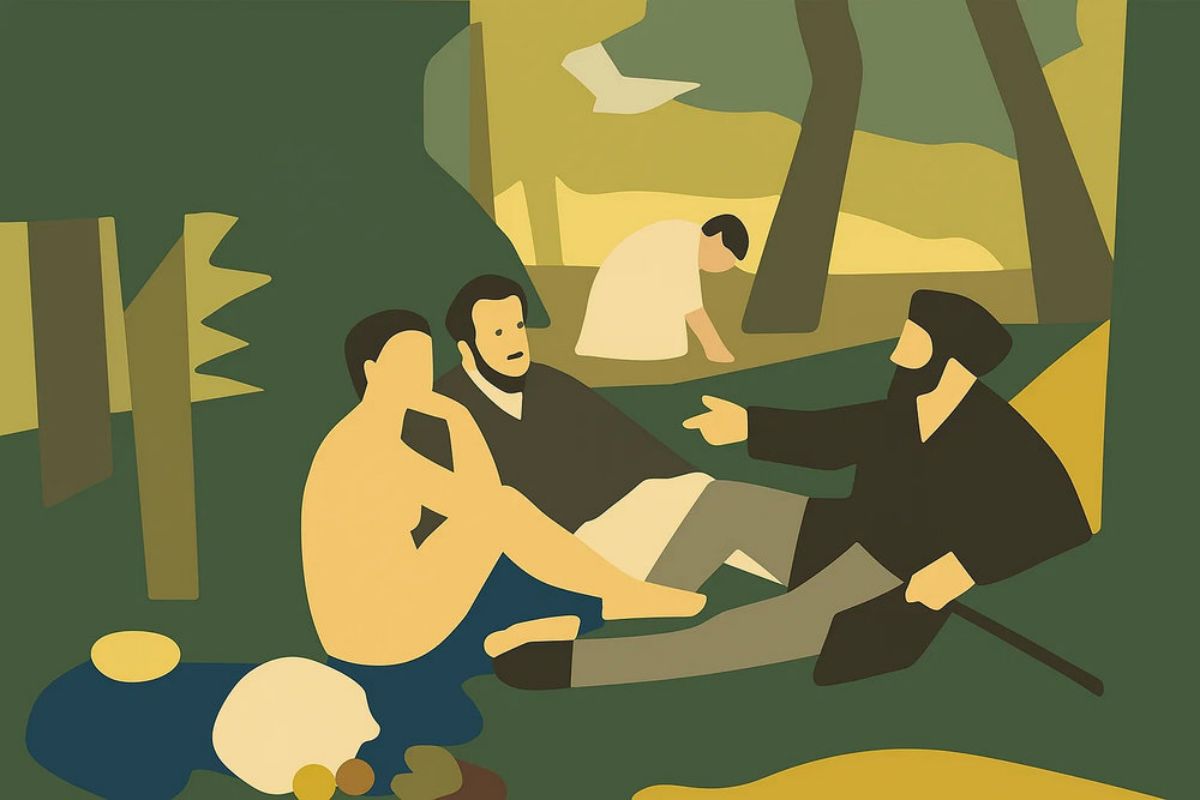
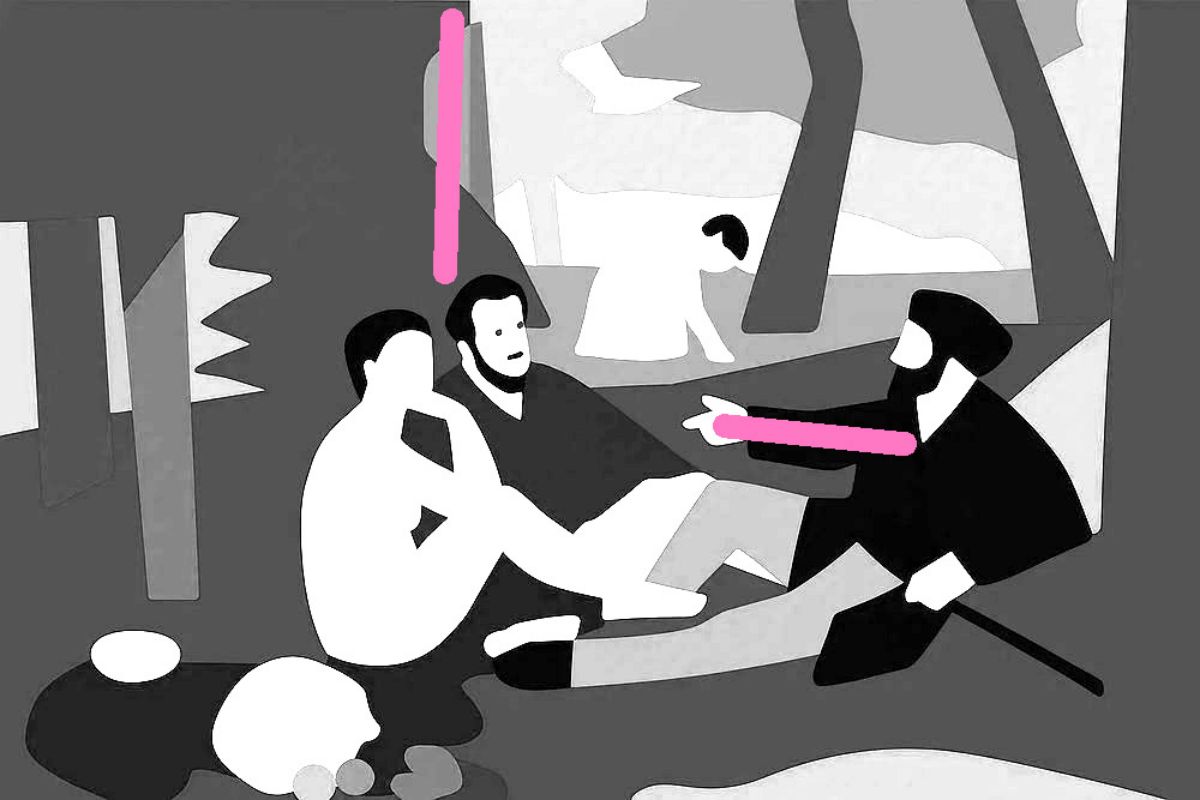
Values oppose the nude’s bright body to dark vegetation and men’s clothing. This contrast fixes the focal point and structures space. Diagonals of figures and landscape flats create balance between depth and frontality. Central intensity with peripheral diffusion guides the eye between realism and staging.
Balance of light, focus, and form rhythm
The nude’s isolating light extends into the bright cloth and softer background, reinforcing hierarchy. The focal point is heightened not only by contrast but also by spatial isolation from the two clothed men. Forms alternate compact masses and softened contours, playing visible and suggested to keep the eye moving center to background.
Atmosphere of rupture and modernity
These contrasts, focused light, and varied forms produce an intimate yet unsettling atmosphere. Everyday life is transfigured by audacious visual construction where naturalness meets provocation. This tension makes the work a milestone of modern painting.
A copyist’s eye
Copying Luncheon on the Grass seeks coherence within rupture. Keep contrasts frank yet measured to preserve tension between figure and ground. Model the body with clear light laid in broad touches. The brush carries the subject’s ambiguity: direct yet restrained. Manet does not depict scandal: he invents a new visual truth.
This pictorial approach also informs the copies of Edouard Manet’s works created in my studio.
Going Further
ARTISTE DE PARIS
Christian Denéchaud, artiste peintre
50 avenue des Champs Elysées
75008 Paris
SIRET 452248461
FR90452248461
.png?t=)
© Artiste de Paris . fr - 2026