
Poussin’s Assumption of the Virgin: analysis and pictorial reading
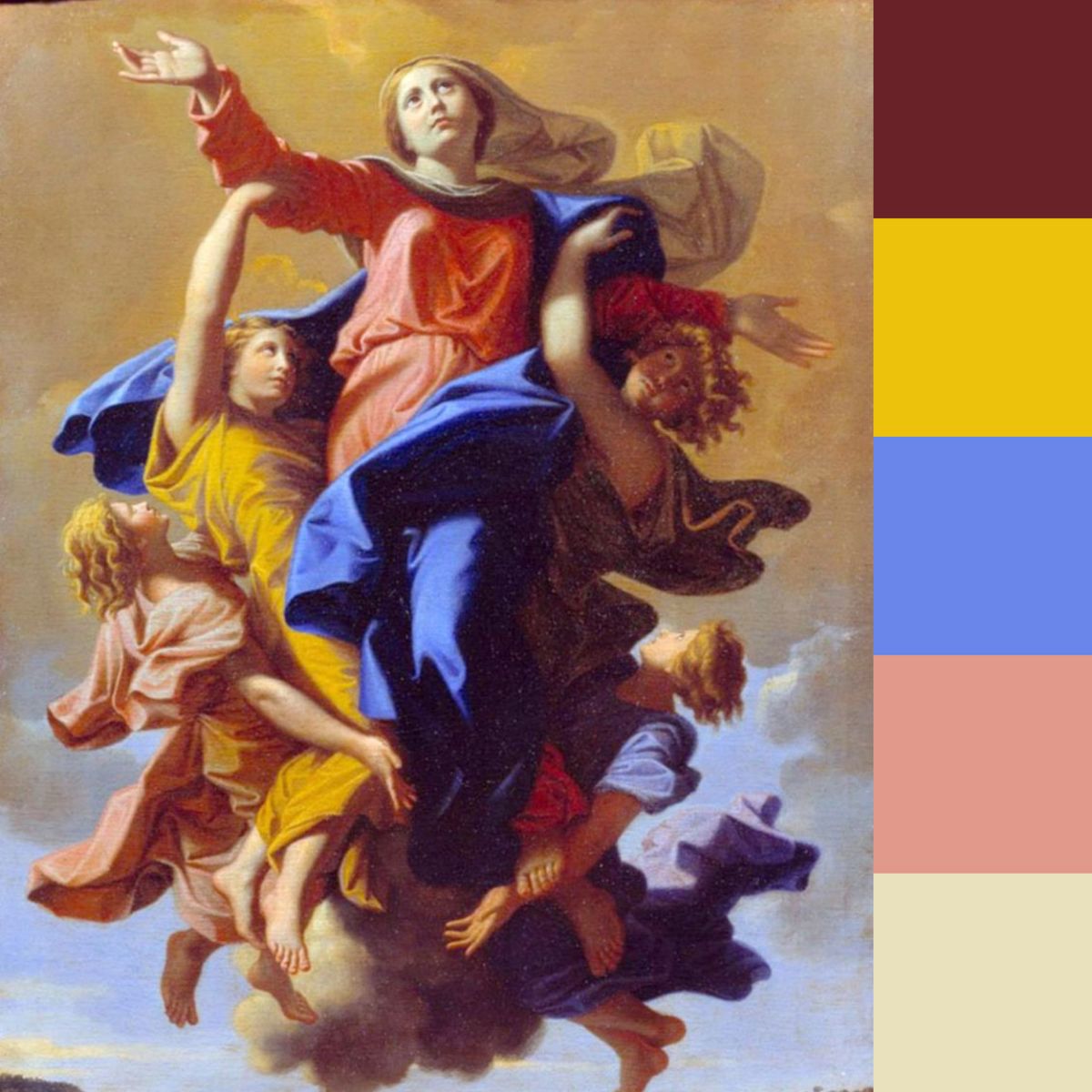
Created in the 17th century, The Assumption of the Virgin demonstrates Poussin’s mastery in uniting faith and reason within a perfect pictorial architecture. The artist expresses spirituality through light, composition, and measure, granting the religious mystery the clarity of an eternal order.
This work may also be reproduced as a hand-painted copy, based on the original and respecting its color and composition.
Visual reading and composition
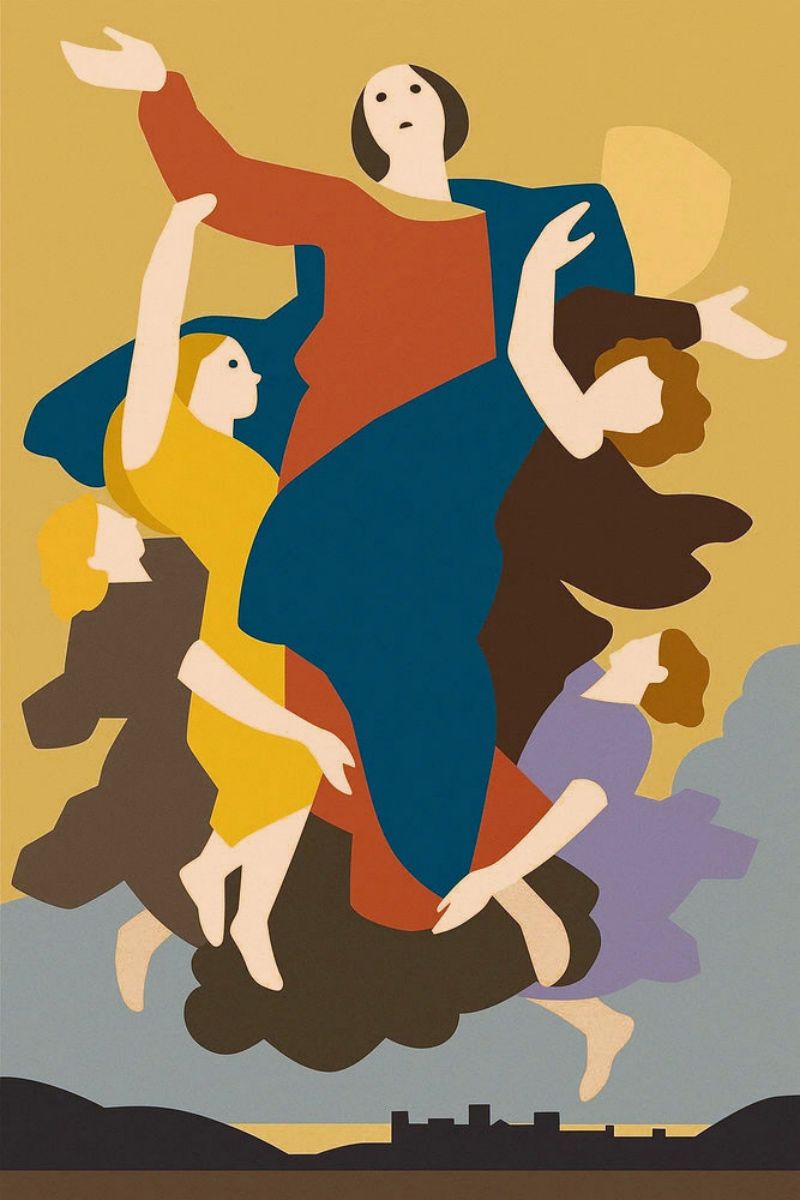
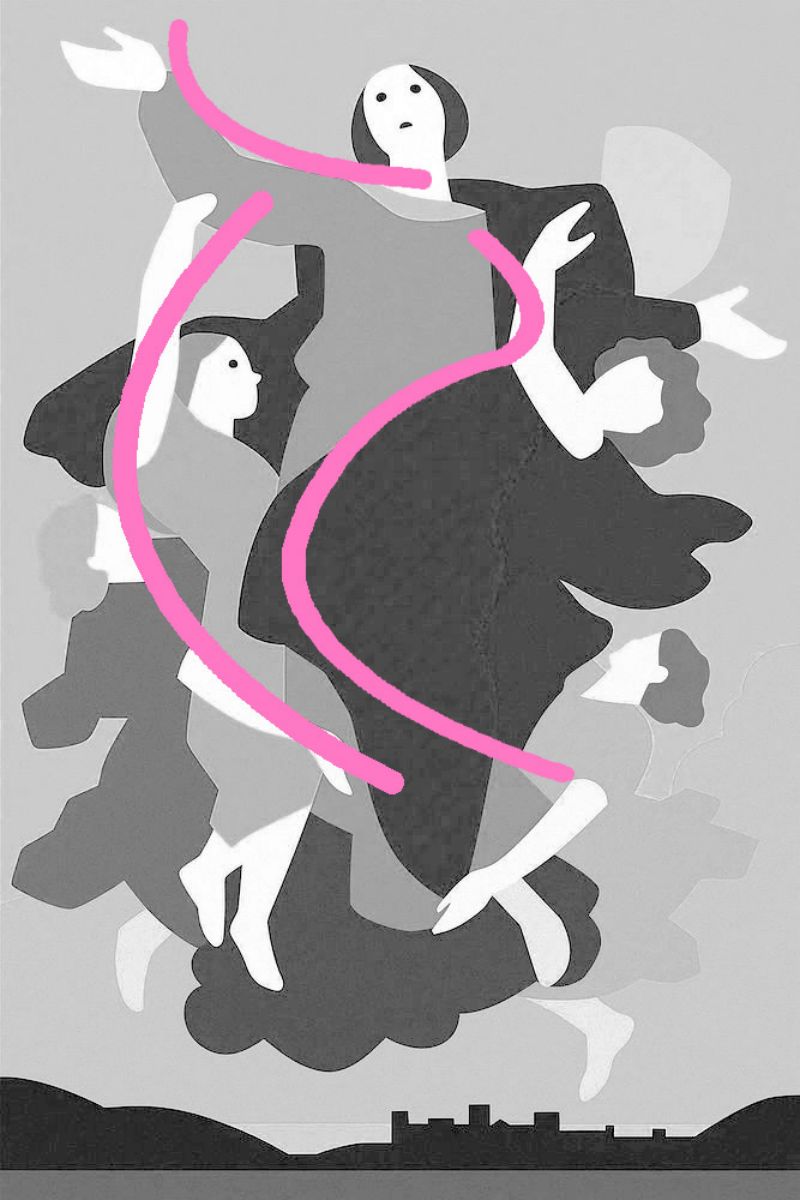
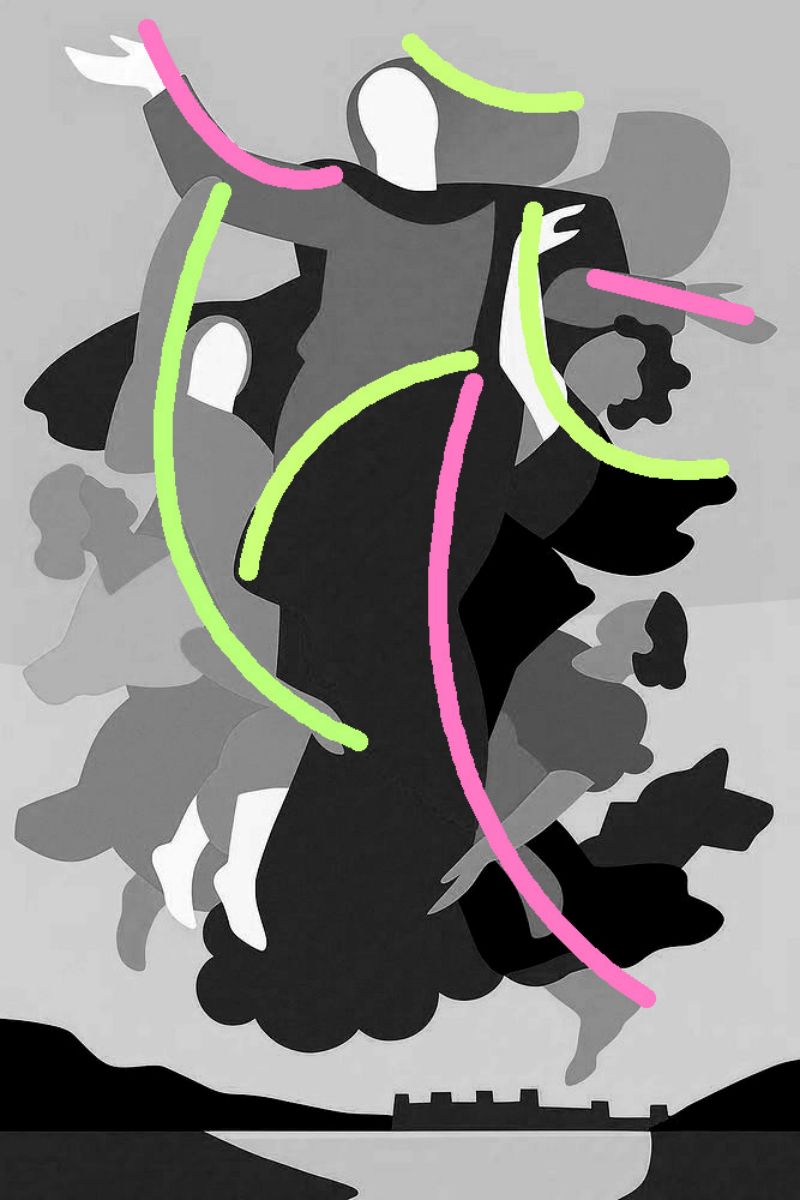
The values are organized between the heavenly brightness enveloping the Virgin and the darker zones of the earthly figures. This contrast fixes the focal point on Mary, irradiating the composition. The stable masses of the apostles oppose the ascending verticality of the Virgin. Crisp contours and rigorous geometry structure the sacred space, balancing movement and stability in a single harmonious impulse.
The articulation of forms and the construction of sacred space
Forms vary between large stable masses—clouds, groups of apostles—and the slender silhouette of the ascending Virgin. The focal point is reinforced by the verticality of the whole and by the gazes converging toward her. Clean contours and geometric organization create a harmonious rhythm, where the stability of earthly forms contrasts with the upward thrust of celestial forms.
An atmosphere of solemnity and transcendence
The combination of contrasted values, the clear focal point, and formal rigor conveys a sense of order and elevation. Poussin transforms the religious scene into a vision both rational and inspired, where classical clarity becomes a spiritual and universal language.
A copyist’s eye
Copying The Assumption of the Virgin means seeking light as a principle of order. Each tone must accord with the next without harshness or excess. The modeling rises through transparent superimpositions until inner clarity appears. The risk is to paint too brightly: here, light does not strike; it emanates. In painting, one understands that Poussin does not depict the miracle; he paints the reason of the divine.
This pictorial approach also informs the copies of Nicolas Poussin’s works created in my studio.
Going Further
ARTISTE DE PARIS
Christian Denéchaud, artiste peintre
50 avenue des Champs Elysées
75008 Paris
SIRET 452248461
FR90452248461
.png?t=)
© Artiste de Paris . fr - 2026