
Vermeer’s The Milkmaid: analysis and pictorial reading
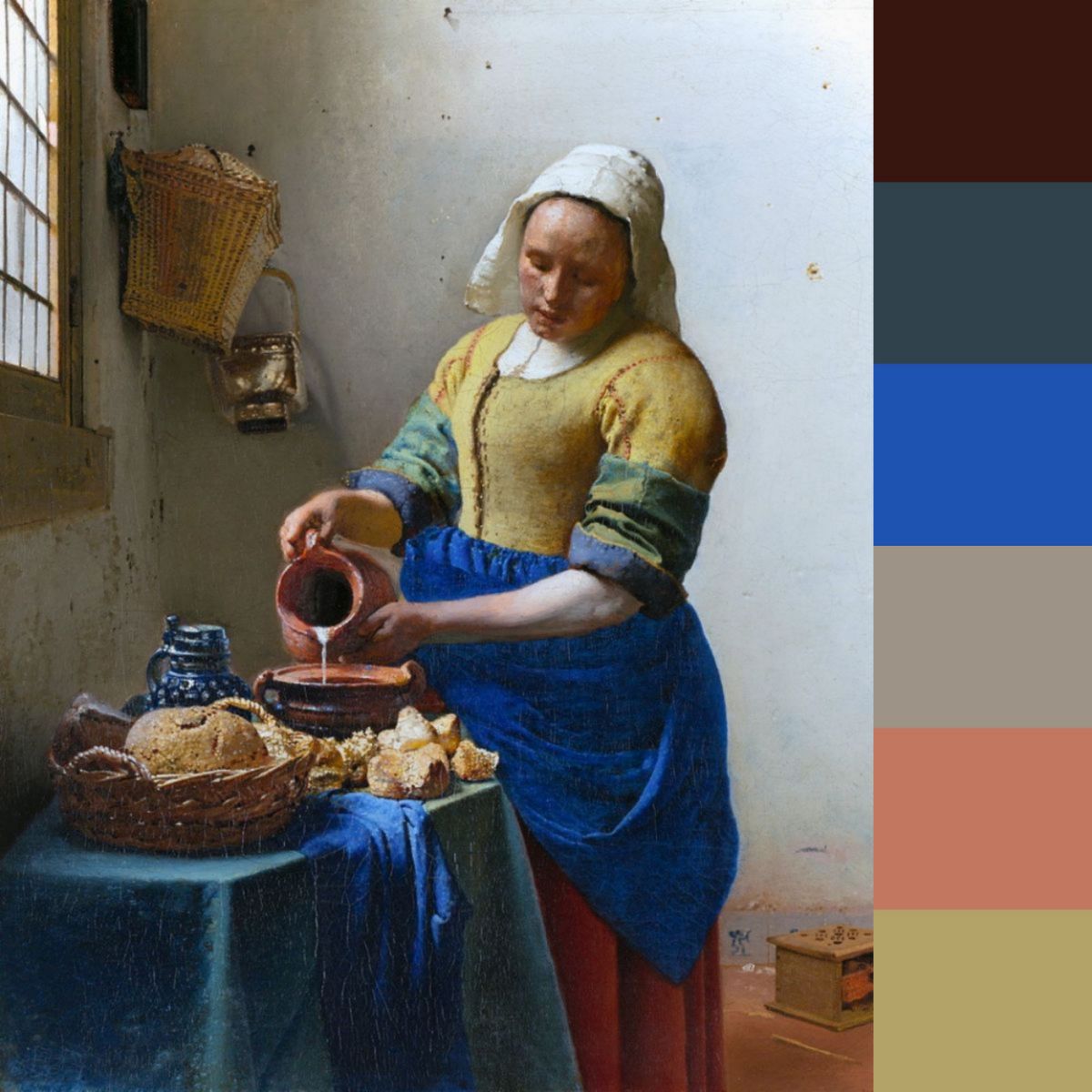
Painted around 1658, The Milkmaid turns an ordinary domestic scene into silent harmony. Light grants a simple act — pouring milk — spiritual and pictorial dignity. Clarity becomes language and symbol.
This work may also be reproduced as a hand-painted copy, based on the original and respecting its color and composition.
Visual reading and composition
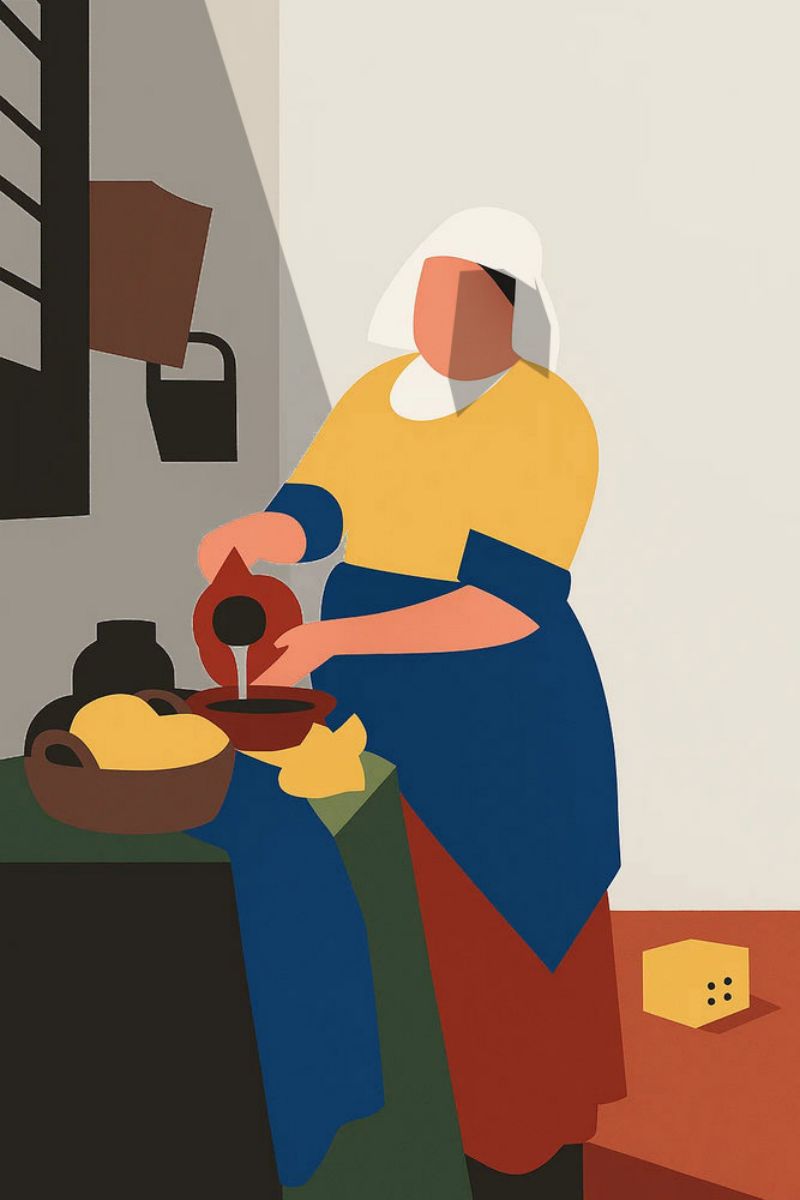
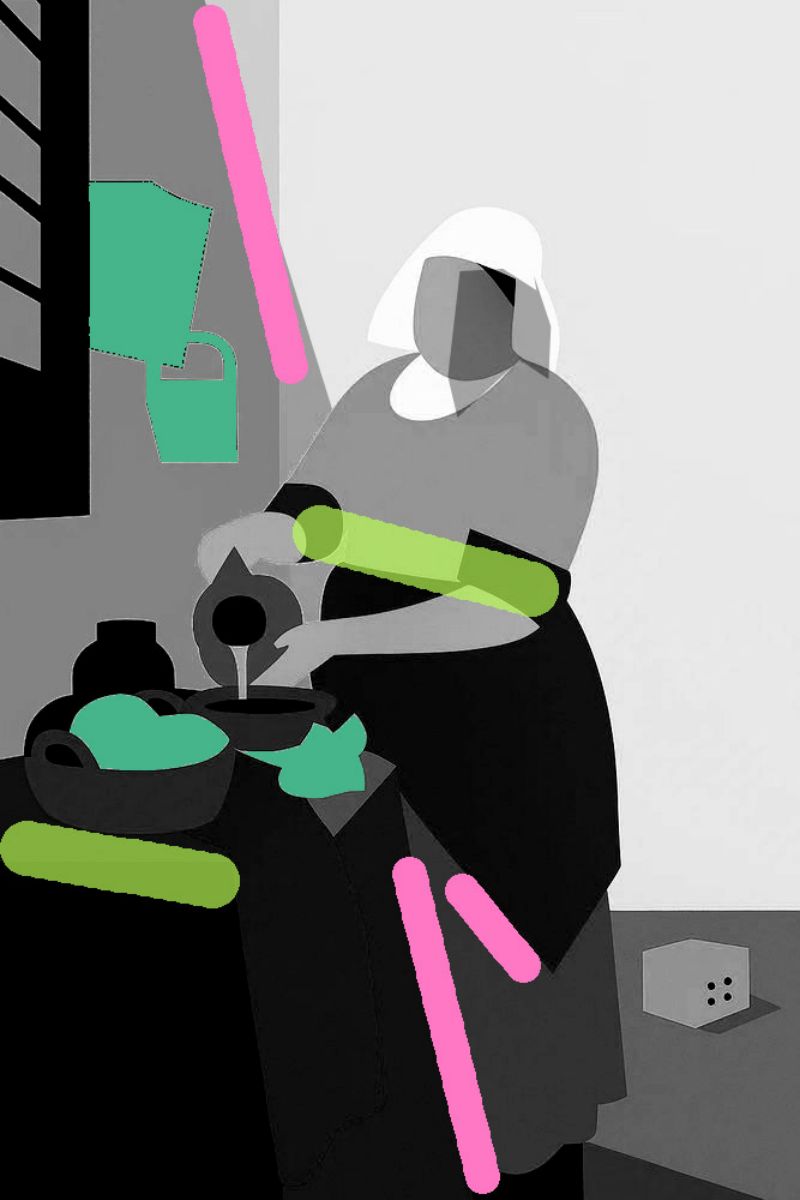
Values oppose the brightness of figure and table to the room’s shadow. This contrast structures the picture and heightens presence. The tiny stream of milk first catches the eye, then guides it to the servant. Geometric forms of wall, bread, and jug balance in calm order, unified by side light from the window.
Unity of focus, geometry, and light contrast
The gaze, drawn by the milk, naturally reaches the figure whose firm contours converse with softer masses of table and wall. Simple volumes — wall, jug, cloth — meet minute details, balancing stability and delicacy. Side light unifies the whole and reinforces hierarchy.
An atmosphere of quiet devotion
Contrasting values, precise focal point, and geometric order create calm and concentration. Far from anecdote, Vermeer delivers an image of timeless dignity.
A copyist’s eye
Copying The Milkmaid is painting light as substance. Each tone must accord with the last, without rupture. Build modeling by transparent layers where shadow retains clarity. Keep the gesture slow and measured. Vermeer does not depict a servant: he reveals the quiet nobility of the real.
This pictorial approach also informs the copies of Johannes Vermeer’s works created in my studio.
Going Further
ARTISTE DE PARIS
Christian Denéchaud, artiste peintre
50 avenue des Champs Elysées
75008 Paris
SIRET 452248461
FR90452248461
.png?t=)
© Artiste de Paris . fr - 2026