
Klimt’s The Kiss: pictorial analysis and symbolist reading
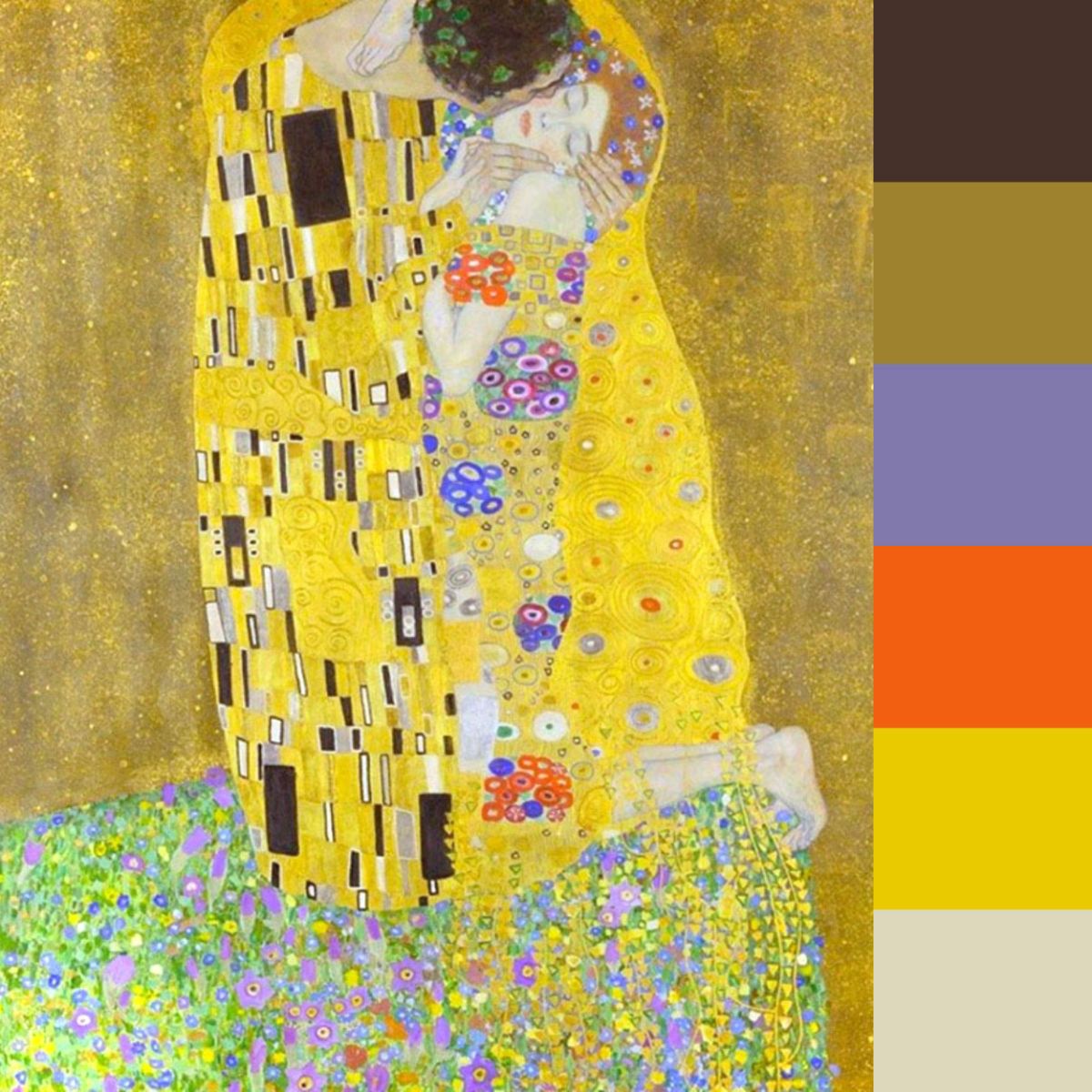
Painted between 1907 and 1908, The Kiss crowns Klimt’s Golden Period. The artist fuses symbolism, ornament, and sensuality to elevate human embrace into sacred vision. Gold and stylization turn intimacy into universal icon.
This work may also be reproduced as a hand-painted copy, based on the original and respecting its color and composition.
Visual reading and composition
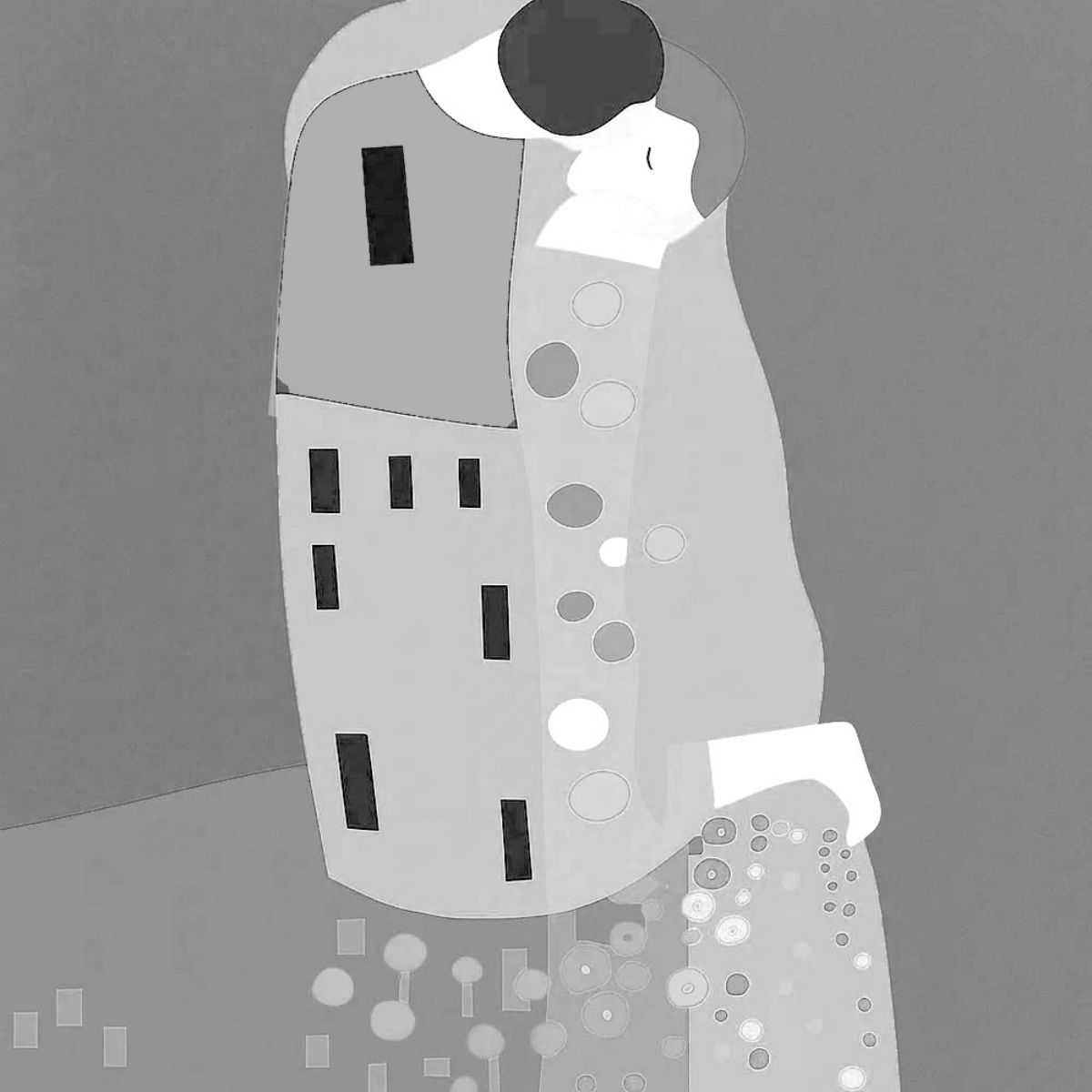
Values oppose radiant gold to dark background, isolating the couple and intensifying inner glow. Vertical lines of the male cloak contrast with the female’s soft curves, harmonizing opposites. Flat gold shapes and rhythmic motifs create a suspended space — sensual yet spiritual.
Focal point and structure
The focal point lies in the lovers’ faces, gently inclined within a golden halo. Vertical and curved rhythms guide the gaze; angular male motifs balance rounded feminine patterns, uniting duality.
Atmosphere and message
By blending value contrast, focused embrace, and ornate design, Klimt creates an allegory of love. Gold transcends the intimate moment into timeless icon, merging body and spirit.
A copyist’s eye
Copying The Kiss means working matter as condensed light. Gold demands alternating matte and glossy layers to restore depth. The drawing must remain precise despite ornament. Each motif follows the body’s rhythm. The brush, slow and meditative, fuses texture and emotion. Klimt does not decorate — he consecrates light as the language of love.
This pictorial approach also informs the copies of Gustav Klimt’s works created in my studio.
Going Further

ARTISTE DE PARIS
Christian Denéchaud, artiste peintre
50 avenue des Champs Elysées
75008 Paris
SIRET 452248461
FR90452248461
.png?t=)
© Artiste de Paris . fr - 2026