
Cézanne’s Mont Sainte-Victoire: analysis of composition
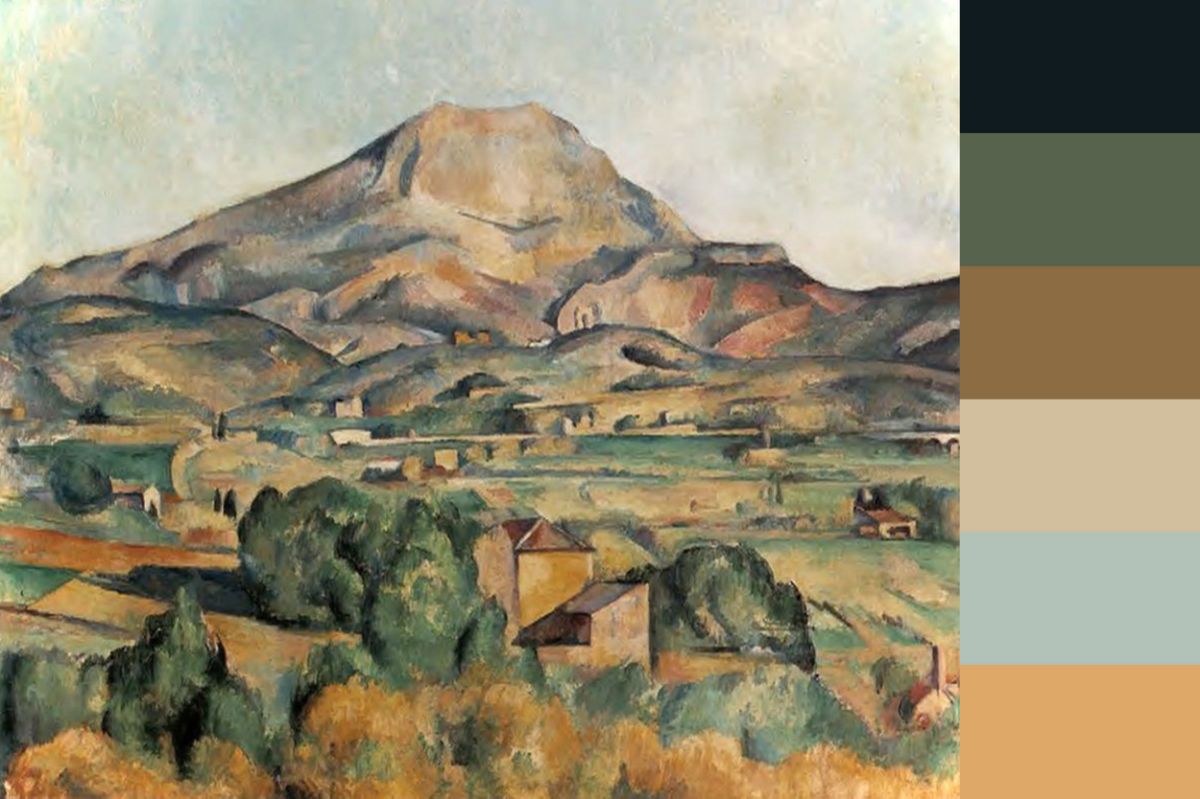
Painted from 1885 onward, Mont Sainte-Victoire is central to Cézanne’s work. From Aix, he observes this familiar form to extract structural essence. Through light, he turns Provençal landscape into an architecture of volumes and color relations: a vision both stable and vibrant.
This work may also be reproduced as a hand-painted copy, based on the original and respecting its color and composition.
Visual reading and composition
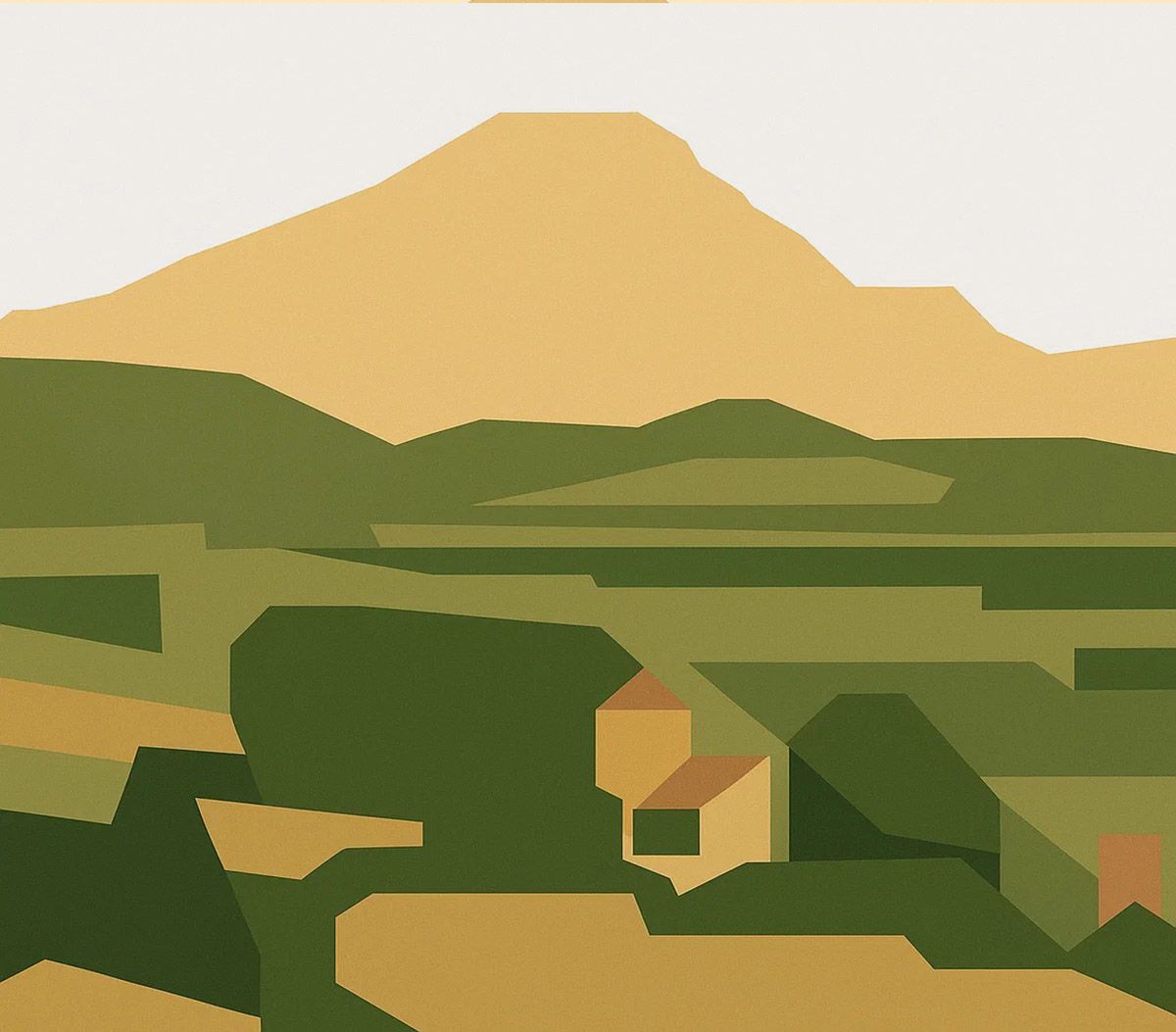
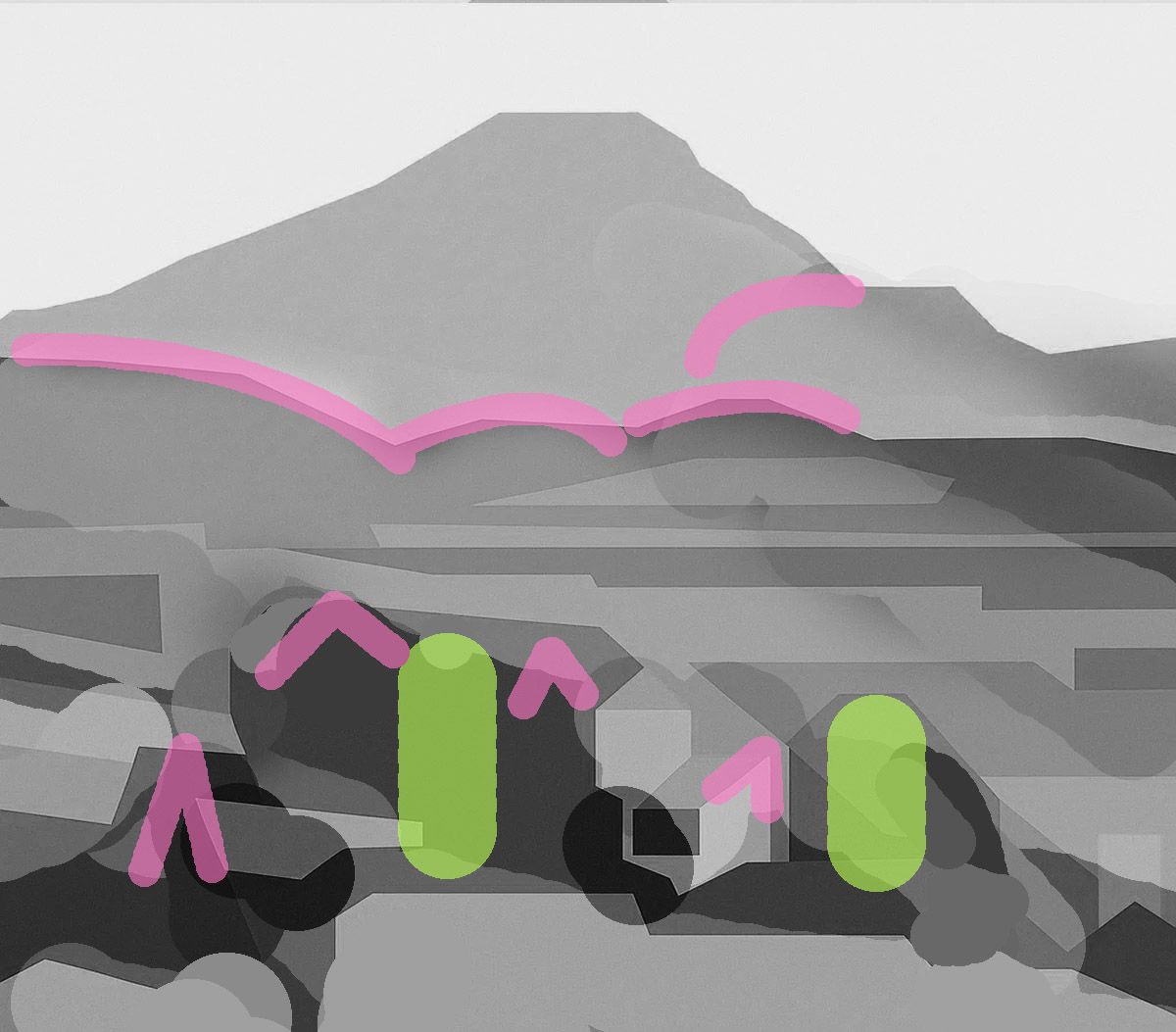
Values organize into large masses: a light mountain dominates a valley structured by darker greens while the bright sky balances the earth base. This tonal hierarchy creates fluent reading from base to summit and gives quiet stability. The mountain, as focal point, unifies the planes. Geometrized forms — trees, houses, reliefs — interlock like blocks with calm, measured rhythm.
Focal point: the mountain as visual center of gravity
The focal point lies in the triangular silhouette of Mont Sainte-Victoire. Its size, central placement, and luminosity draw the gaze at once. From the summit, the eye naturally descends to fields and villages, then returns to foreground trees. Cézanne guides the viewer with a hierarchy linking near and far into a single visual movement.
Forms and composition: construction and rhythm
Forms are built like architectural blocks: the mountain’s geometric volumes, compact tree masses, small rectangular houses. Simplification gives a near-mineral solidity. Contours vary — crisp on the mountain, softer in foliage and sky — creating subtle lost-and-found edges. Values, focus, and forms interact to express Cézanne’s vision of ordered, structured, vibrant nature.
A copyist’s eye
Copying Mont Sainte-Victoire is painting the construction of light itself. Lay each tone justly, without excess mixing, to preserve vibration between planes. Keep the gesture measured, almost architectural, following mass relations. Sky blues, earth ochres, subdued greens answer one another like chords. Cézanne does not represent nature: he rebuilds its living logic.
This pictorial approach also informs the copies of Paul Cézanne’s works created in my studio.
Going Further
ARTISTE DE PARIS
Christian Denéchaud, artiste peintre
50 avenue des Champs Elysées
75008 Paris
SIRET 452248461
FR90452248461
.png?t=)
© Artiste de Paris . fr - 2026