
Leonardo da Vinci’s Mona Lisa: analysis and pictorial reading
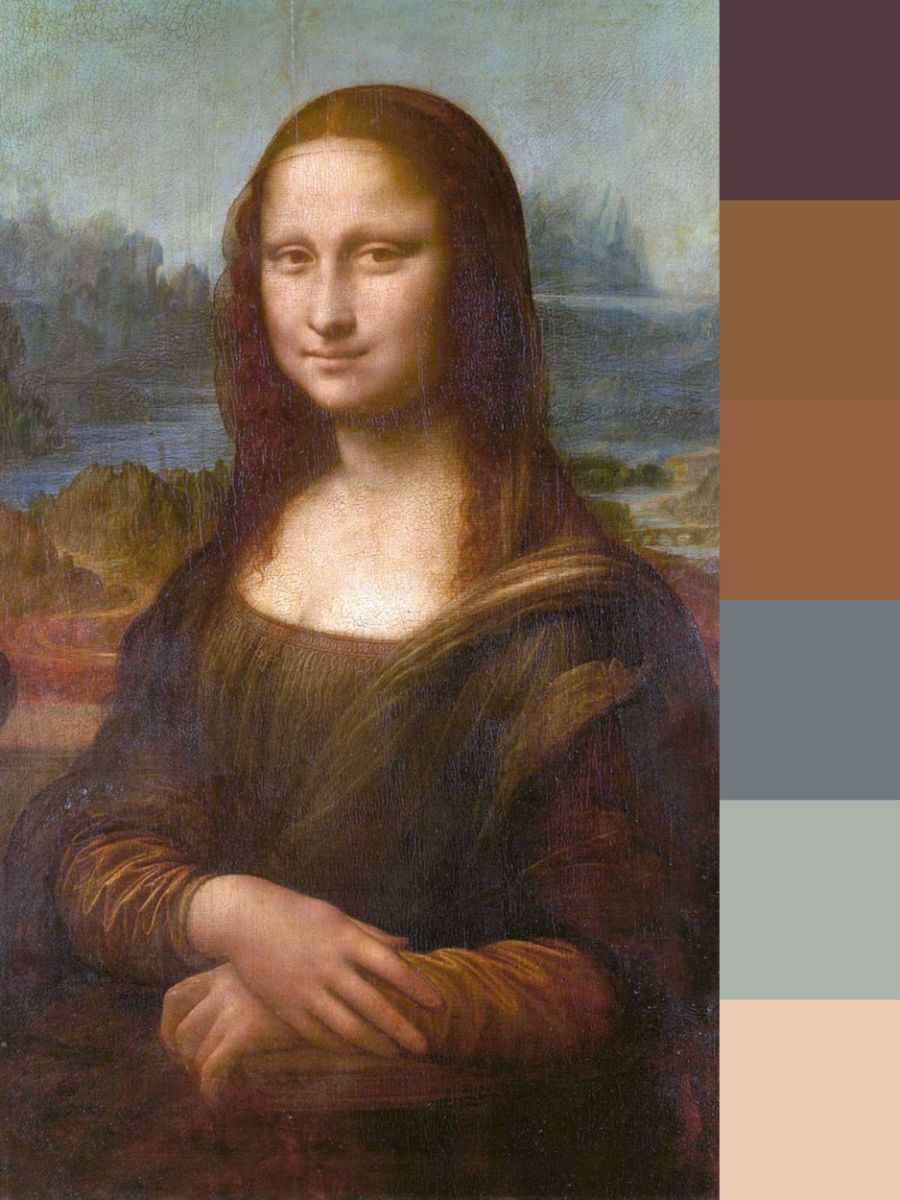
Painted between 1503 and 1506, the Mona Lisa represents the culmination of Leonardo’s research into light, modeling, and the psychology of portraiture. Through the subtlety of sfumato and gentle transitions, the artist goes beyond likeness to create a living image that is both intimate and enigmatic. This calm face, poised between smile and silence, embodies the humanist ideal of the Renaissance.
This work may also be reproduced as a hand-painted copy, based on the original and respecting its color and composition.
Hierarchy of values and atmospheric modeling
Values are distributed between the brightness of face and hands and the darker zones of garment and landscape. The contrast remains soft: light seems to emanate from within rather than fall onto the subject. This fused transition creates continuity between model and environment. The focal point naturally fixes on the face, where each tonal passage builds the psychological depth of the gaze.
The role of forms and construction of the gaze
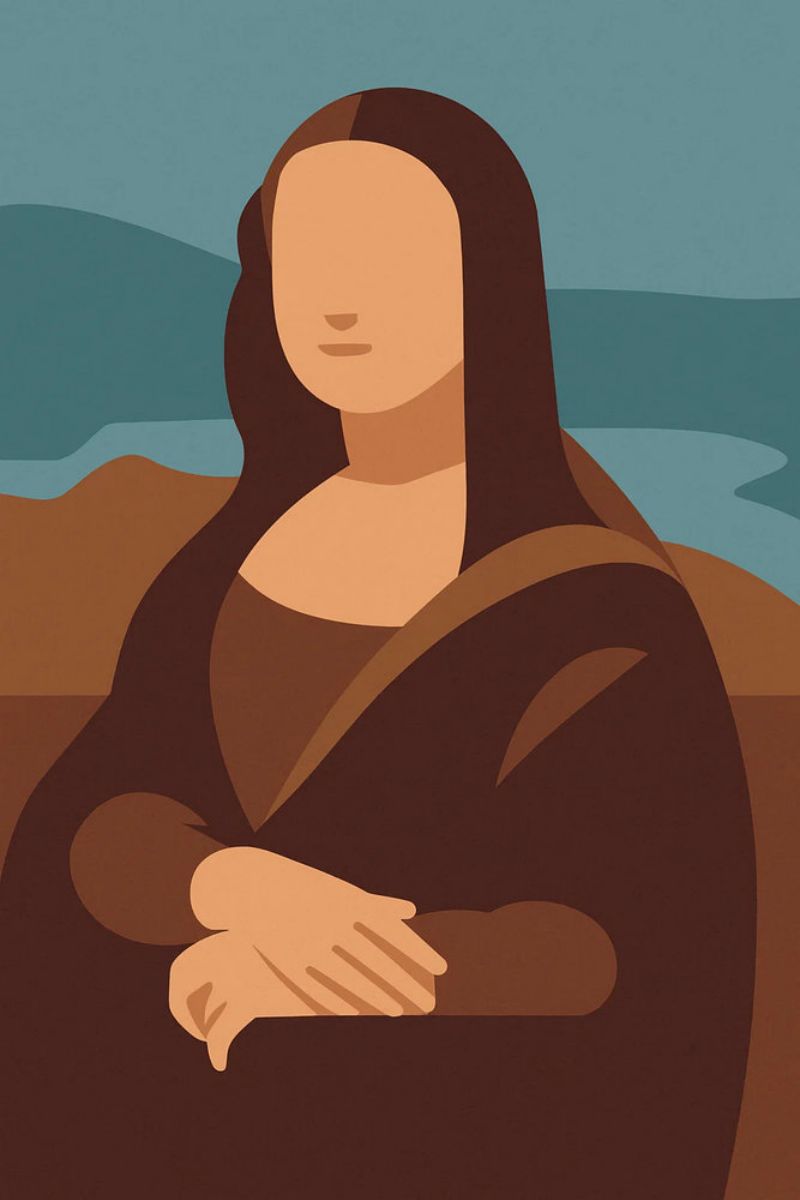
The composition rests on the pyramid formed by the figure and folded arms. The horizontal lines of the landscape oppose the body’s curves, balancing stability and suppleness. The focal point intensifies through the slightly off-center axis of the gaze that catches and holds the viewer’s eye. The fusion of softened contours with solid structure grants a presence at once fleshly and abstract.
An atmosphere of silence and mystery
The combination of subtle values, a face-centered focal point, and fluid forms creates an atmosphere of interior calm. The Mona Lisa tells nothing: she contemplates herself. Leonardo turns the portrait into a visual meditation where the real and the ideal merge in elusive harmony.
A copyist’s eye
Copying the Mona Lisa means painting the very breath of light. Every passage must be blended without rupture; no line should appear drawn—everything should arise from sliding values. The danger is to define too much: here, form lives in indecision. It is patient work that teaches how the softness of tone can bear the full depth of the gaze.
This pictorial approach also informs the copies of Leonardo da Vinci’s works created in my studio.
Going Further

ARTISTE DE PARIS
Christian Denéchaud, artiste peintre
50 avenue des Champs Elysées
75008 Paris
SIRET 452248461
FR90452248461
.png?t=)
© Artiste de Paris . fr - 2026